Welcome: Shenzhen Zhuolida Electronics Co.TD
Language:
 ∷
∷

∷
∷
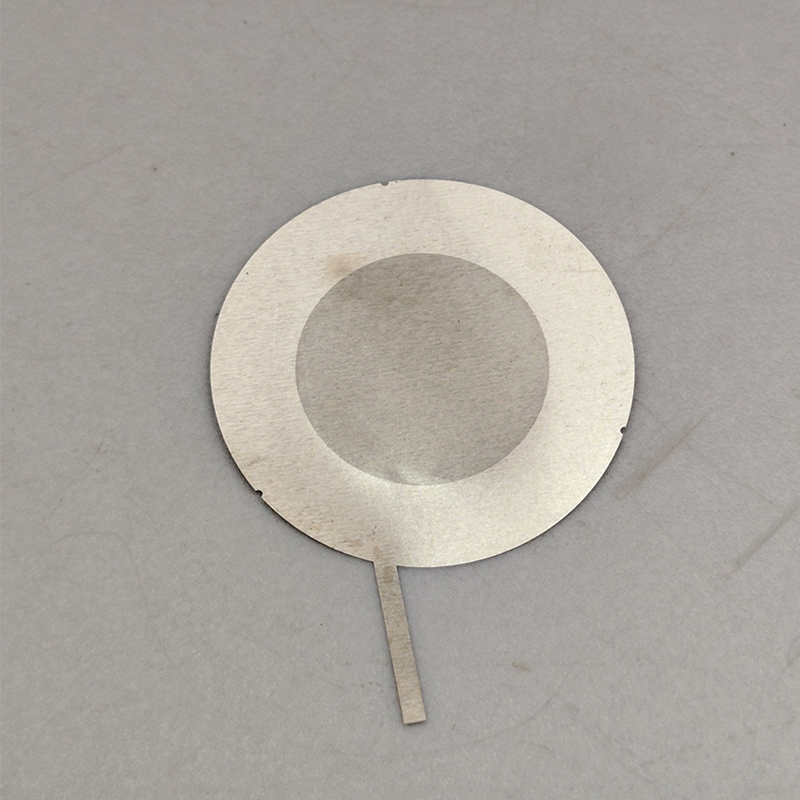
1. Overview and Technical Foundation of the Precision Electroforming Industry
1.1 Definition and Principle of Precision Electroforming Technology
Precision electroforming is an advanced manufacturing technology based on the principle of electrochemical deposition, which produces high-precision metal parts by replicating the shape of a cathode mandrel. Its core is to use electrolysis to make metal cations in the electrolyte migrate to the mandrel and undergo reductive deposition. After reaching the preset thickness, the mandrel is stripped to obtain precision components consistent with the contour of the mandrel. This technology integrates electrochemistry, materials science and intelligent control. The technological process includes mandrel design and production, surface conductive treatment, electrolytic deposition, demoulding and post-processing. Usually, precision deposition is achieved in a constant temperature electroforming tank at 45-55℃ with a current density of 1-5 A/dm². Different from ordinary electroplating, it focuses on the characteristics of "zero cutting and high precision".
1.2 Core Technical Advantages and Differentiating Features
The core advantages of precision electroforming are reflected in four aspects: first, high precision, which can achieve micron-level (1-10μm) or even nanometer-level replication. Using pulse electric field regulation, a diameter tolerance of 0.03mm ± 0.005mm can be achieved, which is better than stamping/etching processes; second, the ability to form complex structures, which can manufacture structures that are difficult to achieve by traditional processing, such as microholes with an aspect ratio of 1:50 and spiral flow channels, and chip heat dissipation fins can be formed in one step; third, material performance enhancement, the hardness of nickel-cobalt/nickel-tungsten alloy coatings can reach HV 500-700, and the surface roughness is below Ra 0.05μm, which improves product life and reliability; fourth, efficient and flexible production, the small-batch trial production cycle is less than 72 hours, which can reduce mass production costs, such as the cost of Tesla 4680 battery nickel tabs reduced by 40%.
1.3 Industry Development History and Technological Evolution
Precision electroforming technology was invented by Russian scholar Б.С. Jacobi in 1837, initially used for replicating metal works of art. In the late 19th century, it was applied to record stamping dies, and gradually expanded to the industrial field in the 20th century. In the modern stage, the technology has broken through from micron level to nanometer level, with the emergence of nanocrystalline electroforming technology. Combined with lithography technology, it has formed advanced processes such as LIGA, which has gradually penetrated into high-end manufacturing fields such as semiconductors, optics and medical care, becoming a key supporting technology for high-end manufacturing.
2. Analysis of the Current Situation of the Global Precision Electroforming Market
2.1 Global Market Size and Growth Trend
The global precision electroforming market shows a steady growth trend. Although there are differences in statistical calibers among different institutions, the overall trend is consistent. According to Hengzhou Chengsi data, the global market size in 2024 was about 72.32 billion yuan (equivalent to 10 billion US dollars), and it is expected to reach 101.1 billion yuan by 2031, with a CAGR of 4.8% from 2025 to 2031; QYResearch data shows that the global market size in 2024 was about 10 billion US dollars, and it is expected to reach 14.24 billion US dollars by 2031, with a CAGR of 5.1% during 2025-2031. In the segmented fields, the global electroforming mold market size was about 470 million US dollars in 2025, and it is expected to reach 644.9 million US dollars by 2034, with a CAGR of 3.6%; the global electroforming component market size was about 385.42 million US dollars in 2024, with a CAGR of 8.75%, showing a stronger growth momentum.
2.2 Regional Market Distribution and Feature Analysis
The global market presents a characteristic of regional concentration, with the Asia-Pacific region occupying a dominant position, accounting for 39% of the global electroforming mold market, Europe 28% and North America 27%. The Asia-Pacific region, with China, Japan and South Korea as the core, has become the largest consumer center relying on the advantages of electronic products, semiconductor packaging and automobile production. Among them, China accounts for 35% of the global market, Japan 18%, India 12% and other Southeast Asian countries 17%. North America focuses on high-precision medical and aerospace applications, and the United States accounts for 38% of the global demand for micro-electroforming components; Europe is dominated by Germany, France and other countries, with strong demand in high-end manufacturing and precision instruments, and strict requirements on technology and quality.
2.3 Industrial Chain Structure and Market Driving Factors
The industrial chain is divided into three links: the upstream is metal materials (nickel, copper, etc.), electrolytes and conductive materials, and the cost of precious metal raw materials such as nickel is relatively high; the midstream is electroforming equipment manufacturing and process services, the investment in vacuum electroplating equipment exceeds 5 million yuan, and the requirements for temperature and electrolyte control are extremely high; the downstream covers multiple fields such as electronics, optics, molds and medical care. Market driving factors include: technological breakthroughs (micro-nano precision reaching ±3 nm, multi-material co-deposition technology improving performance), emerging applications (demand driven by AR/VR and biochips), industrial upgrading (demand for miniaturization of electronic equipment) and policy support for high-end manufacturing in various countries.
3. In-depth Analysis of Segmented Markets in Application Fields
3.1 Application Analysis in the Electronic Component Field
The electronic field is a core application scenario, mainly including: semiconductor packaging, electroformed copper pillars realize 1μm aperture filling, yield increased by 30%, helping 3D chip stacking; connector manufacturing, Omron has realized mass production of electroformed contact connectors with precision up to tens of nm and surface roughness Ra=3nm; sensor manufacturing, providing precision structures such as microgears and microcantilevers for MEMS devices; PCB manufacturing, electroformed test probes are used for high-frequency and high-density testing such as wafers and BGA, with excellent mechanical properties.
3.2 Application Analysis in the Optical Device Field
In the optical field, precision electroforming can prepare low-roughness mirrors, diffractive optical elements, microlens arrays, etc., which are used in lithography equipment, microscopes, etc. NASA uses it to manufacture nickel alloy electroformed mirrors for space-based optical systems; soft X-ray ellipsoidal mirrors are prepared by electroforming to replicate quartz mandrels, meeting nanometer-level precision requirements; the aperture precision of precision diaphragms reaches ±1μm, and the LED industry uses it to produce high-reflectivity brackets and microlens arrays to improve light efficiency and heat dissipation.
3.3 Application Analysis in the Precision Mold Field
Electroforming molds can achieve ±2μm micron-level replication. The EF ultra-precision electroforming technology can complete the work that usually takes 700 hours by traditional machine tools in 24 hours, greatly improving efficiency and reducing costs. The main applications include injection molds, ultra-precision molds, CD/DVD stamping dies and semiconductor packaging molds. Among them, CD/DVD molds replicate pit patterns through electroforming to ensure disc precision, and semiconductor packaging molds help chip miniaturization and integration.
3.4 Application Analysis in the Medical Device Field
The medical field has extremely high requirements for precision and biocompatibility. Precision electroforming is used to produce surgical instruments, minimally invasive catheters, dental implants, etc., and can process microstructures of 0.1-1mm. Microfabrica in the United States has obtained FDA approval for its 3D electroformed surgical tools. Moravej et al. prepared 100μm thick iron foil on the surface of titanium alloy through electroforming for degradable implants; electrodeposition coating technology can also enhance the performance of surgical tools and ensure the safety of implanted devices.
3.5 Market Size and Growth Prospects of Each Application Field
Semiconductors and medical care are the core growth drivers. MarketsandMarkets predicts that the global precision electroforming market size will exceed 2 billion yuan in 2025, of which semiconductors account for 60% (about 1.2 billion yuan), and the medical field grows at 25% annually (size 580 million yuan). The electroformed SMT stencil market was worth 7.5 billion US dollars in 2023 and is expected to reach 13.72 billion US dollars by 2031, with a CAGR of 13.59%; the demand for micro-optics has increased by 31% since 2020, and the annual growth rate of medical micro-devices has reached 27%, both showing good prospects.
4. Global Competitive Pattern and Analysis of Major Enterprises
4.1 Market Share and Competitive Position of Major Global Manufacturers
The global market concentration is medium and gradually increasing. The total market share of the top ten enterprises in 2023 was 35%, a significant increase from 28% in 2020. The top five electroforming mold manufacturers are Veco, Darwin Precisions, Mishima Kosan, TOWA and Galvanoform, accounting for more than 30% of the total market. Among them, Veco has a market share of more than 12%, producing more than 21,000 molds annually; Darwin Precisions has a market share of 8%, producing more than 15,500 molds annually. The industry competition is sufficient but the leading enterprises have obvious advantages.
4.2 Technical Characteristics Analysis of Competitive Enterprises in Major Regions
Asia-Pacific region: Japan's DOWA accounts for 50% of the copper electroforming market, with significant technological advantages; Dongguan Yi'an Technology in China has made breakthroughs in titanium alloy electroforming, and improved its competitiveness relying on cost and market scale advantages. North America region: Microfabrica in the United States is leading in the field of medical electroforming, and its 3D electroformed surgical tools have obtained FDA certification. Europe region: Germany's Heraeus leads the field of precious metal electroformed implants, and other enterprises have their own technical characteristics in aerospace, precision instruments and other fields.
Analysis of Competitive Strategies and Differentiation Methods
Leading enterprises mainly adopt four types of strategies: first, technological leadership, such as DOWA's monopoly in copper electroforming, Microfabrica's medical certification technology, and Heraeus' expertise in precious metal electroforming; second, cost control, Chinese enterprises reduce costs through large-scale production, and Tesla reduces the cost of battery components through process innovation; third, vertical integration, some enterprises cover the entire industrial chain from raw materials to finished products to improve profit margins; fourth, specialization, focusing on segmented fields such as medical care and optics to establish segmented market advantages.
4.4 Development Status and Competitive Advantages of Chinese Enterprises
China accounts for 35% of the global market, making it the largest market. The scale of China's electroforming mold industry was about 30 billion yuan in 2025, with a year-on-year increase of 12%. The advantages are: significant cost advantages, low labor and raw material costs; large market scale, forming demand support relying on the global manufacturing base; strong policy support, the "14th Five-Year Plan" promotes the transformation of high-end manufacturing; improved technological innovation capacity, with breakthroughs in titanium alloy electroforming and other fields. However, there are obvious shortcomings: high-end electroplating solutions and precision equipment rely on imports, the import dependence of high-end molds exceeds 45%, and there is a gap in technology and brand compared with enterprises in Japan, South Korea and Germany.
5. Technological Development Trends and Innovation Directions
5.1 Development Trends in Materials Science
Materials are developing towards diversification and high performance: in terms of new alloys, nickel-cobalt and nickel-tungsten alloys improve hardness and high temperature resistance, and titanium alloy electroforming has achieved technological breakthroughs; in terms of composite materials, the copper-polymer composite electroforming material developed by KAIST in South Korea remains stable after 100,000 bending tests, and nano-particle co-deposition materials endow molds with self-lubricating and high thermal conductivity characteristics; in terms of functional materials, degradable metals are used for implants, biocompatible materials meet medical needs, and nickel-based ceramic composite coatings are suitable for high-temperature working conditions.
5.2 Innovation Directions of Process Technology
Process innovation focuses on three points: first, ultra-high precision control, micro-nano precision reaching ±3 nm, pulse current modulation and supercritical CO₂ assisted process realizing 50nm precision and >10:1 aspect ratio manufacturing, with yield exceeding 90%; second, intelligent control, digital twin realizing process simulation and optimization, AI system monitoring mass production stability, increasing popularity of automatic electroforming systems, with deposition rate exceeding 0.4 mm per hour; third, green manufacturing, the market share of cyanide-free electroplating solutions increased from 35% in 2018 to 82% in 2025, and the annual growth rate of patent applications for environmental protection substitutes such as EDTA is 31%.
5.3 Development Path of Equipment Technology
Equipment is upgrading towards automation, intelligence and precision: precision processing equipment uses five-axis machining centers (tolerance ≤0.005mm) to manufacture mandrels, or magnetron sputtering to coat diamond-like carbon (DLC) films to improve hardness; ultra-precision replication technology achieves tens of nm precision and Ra=3nm surface finish, and aluminum mandrels can achieve 5nm RMS surface finish; the popularization of intelligent manufacturing equipment is accelerating, the penetration rate of intelligent manufacturing is expected to reach 60% in 2027, and integrated production lines realize integrated production.
5.4 Trends in the Integration of Cutting-edge Technologies
Precision electroforming is deeply integrated with technologies in multiple fields: combined with additive manufacturing, 3D printing prepares mandrels and electroforming endows them with metal surfaces, forming a hybrid manufacturing paradigm; combined with lithography technology to form LIGA process, improving precision and productivity; combined with biomedicine to prepare highly compatible implanted devices; combined with new energy technology to help the lightweight of new energy vehicles, reduce the cost of battery components, and adapt to the rapid iteration demand of molds.
6. Market Entry Strategy and Investment Analysis
6.1 Analysis of Entry Barriers
The industry has high entry barriers, mainly including: technical barriers, requiring mastery of multi-disciplinary knowledge, high-end technology relying on imports, and the import dependence of high-end molds exceeding 45%; capital barriers, the investment in high-end production lines is 50 million to 200 million US dollars, the cost of equipment and precious metal raw materials is high, the average R&D investment of the industry accounts for 8.5% of the total income, and that of large enterprises reaches 12%; customer barriers, downstream customers have strict requirements on quality and stability, requiring long-term cooperation to establish trust, and special certification is required in high-end fields; policy barriers, increasingly strict environmental protection requirements, EU REACH, California Proposition 65 and other policies increase compliance costs.
6.2 Investment Scale and Cost Structure
The investment scale varies greatly according to different positioning: the total investment of a small experimental line is about 250,000 yuan, that of a medium-sized production line is about 200 million yuan, that of a large-scale high-end production line starts from 300 million yuan, and the total investment of a complete project can reach 326.805 million yuan (constructed in two phases). In the cost structure, equipment investment accounts for a high proportion, the cost pressure of raw materials (especially precious metals) is large, and R&D, environmental protection and operating costs (labor, energy) are also important components. The market size of environmental protection services in the electroforming field reached 4.26 billion yuan in 2023, with a year-on-year increase of 53.8%.
6.3 Risk Assessment and Response Strategies
Main risks and responses: technical risks, rapid technological iteration, need to establish an R&D team and cooperate with scientific research institutes to track trends; market risks, demand fluctuations and increased competition, need to diversify layout and establish long-term customer relationships; supply chain risks, raw material price fluctuations and equipment dependence on imports, need to expand diversified suppliers and establish strategic inventory; policy risks, changes in environmental protection and trade policies, need to layout green technologies and establish a compliance system; financial risks, long investment recovery cycle, need to reasonably plan investment and expand financing channels.
6.4 Market Opportunity Identification and Regional Selection
High-growth opportunity fields: semiconductors (size 1.2 billion yuan in 2025, accounting for 60%), medical care (growing at 25% annually), new energy (demand for automobile lightweight), optics (micro-optics demand increasing by 31%). Key regions: China (35% market share, policy support), Southeast Asia (17% market share, rising manufacturing industry), India (12% market share, great potential). Entry suggestions: quickly improve capabilities through technical cooperation, focus on high-growth segmented fields, deepen in key regions, and integrate resources through mergers and acquisitions.
7. Future Development Trends and Prospects
7.1 Industry Development Driving Factors
Future growth mainly relies on four major drivers: technological innovation, breakthroughs in micro-nano precision, AI optimization of processes, and industrialization of new materials; industrial upgrading, the miniaturization of electronic equipment, the lightweight of new energy vehicles, and the development of 5G/6G put forward higher requirements; emerging applications, the demand expansion in AR/VR, biochips, aerospace and other fields; policy support, various countries promote high-end manufacturing and green manufacturing, helping the localization and industrial upgrading of technologies.
7.2 Market Size Forecast and Growth Expectations
The global market will continue to grow: Hengzhou Chengsi predicts that it will reach 101.1 billion yuan in 2031 (CAGR 4.8%), and QYResearch predicts that it will reach 14.24 billion US dollars in 2031 (CAGR 5.1%). In the segmented fields, semiconductor electroforming grows at more than 15% annually, medical electroforming grows at 25% annually, electroforming molds have a CAGR of 3.6%, and electroforming components have a CAGR of 8.75%. In terms of regions, the Asia-Pacific region will continue to dominate, with a market share exceeding 45% in 2030. The scale of China's electroforming mold industry is expected to reach 35 billion yuan in 2025, with a CAGR of about 8.5%, and North America and Europe will maintain stable growth.
7.3 Forecast of Technological Development Path
In terms of precision: from 2025 to 2027, it will reach sub-micron level; from 2028 to 2030, the mainstream will reach 50nm; in the long run, it will break through to atomic level. In terms of materials: the performance of traditional alloys will be improved, composite materials will be mature, and intelligent and biological materials will achieve breakthroughs. In terms of processes: digitalization, intelligence and greenization will become the mainstream, and flexible manufacturing capabilities will be improved. In terms of equipment: the automation rate will exceed 80%, realizing modular, integrated and intelligent upgrading.
7.4 Strategic Suggestions and Market Entry Timing
Optimal entry timing: 2025-2026 is the key period for technology accumulation and market layout, suitable for entry through technical cooperation and talent introduction; 2027-2028 is the best time for large-scale entry, with rapid market demand growth and relatively mature technology; after 2029, the competition will be fierce, and new entrants will face greater challenges. Key directions: focus on high-end fields such as semiconductors and medical care, deepen in the Asia-Pacific region, and focus on micro-nano precision and intelligent processes. Entry strategies: combine technological leadership, win-win cooperation, differentiated competition and capital operation, and control technical, market and financial risks to establish a sustainable development model.
8. Conclusions and Suggestions
8.1 Industry Analysis Summary
Precision electroforming is a key supporting technology for high-end manufacturing, showing the characteristics of technology and capital intensity, with the advantages of high precision and high added value. The global market size is growing steadily, about 72.32 billion yuan in 2024 and expected to reach 101.1 billion yuan in 2031. The Asia-Pacific region dominates, with China accounting for 35% of the market share. The market concentration is gradually increasing, enterprises in Japan, South Korea and Germany are technologically leading, and Chinese enterprises have obvious cost advantages but are insufficient in high-end fields. Technology is developing towards nanometer level, intelligence and greenization, and emerging applications such as semiconductors and medical care drive industry growth.
8.2 Market Entry Suggestions
Overall, an incremental entry strategy should be adopted, starting from fields with relatively low technical barriers and gradually expanding to the high-end market. Technically, focus on digitalization and intelligence, cultivate expertise in materials or processes, and establish an R&D system; market positioning in the Asia-Pacific region, give priority to high-growth fields such as medical care and new energy; control the investment scale at 50 million to 100 million yuan, invest in phases, focusing on R&D, equipment and talents; establish a sound risk management system, implement diversified operations, and ensure healthy cash flow.
8.3 Future Outlook
In the future, technological breakthroughs, emerging applications and industrial upgrading will drive the continuous development of the industry. Fields such as 5G/6G, artificial intelligence and biomedicine will create huge demand. Green manufacturing and international cooperation will become important development directions, and Chinese enterprises are expected to improve their international competitiveness through technological innovation. The industry is in a critical development period with broad prospects, and now is the best time to enter the market. Reasonable strategic planning can achieve rapid development.
Contact:赖先生
Phone:+86 18938693450
Tel:0755-2708-8292
Email:yw9@zldsmt.com
Add:深圳市宝安区福永镇新和村福园一路华发工业园A3栋
 Zhuolida