Welcome: Shenzhen Zhuolida Electronics Co.TD
Language:
 ∷
∷

∷
∷
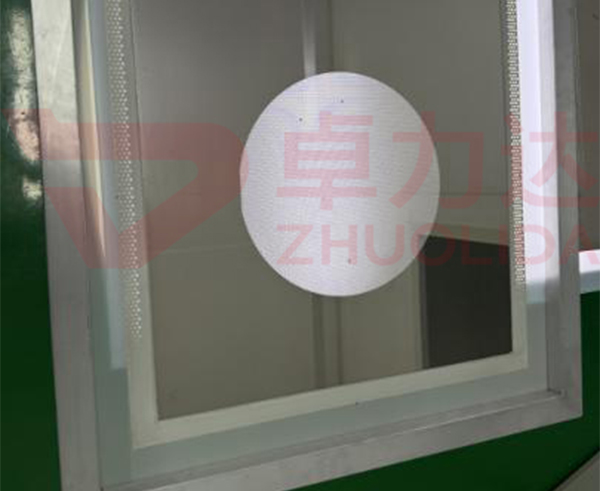
In the rapidly developing advanced packaging industry, the pin pitch of chips is continuously shrinking, making micron-level precision openings a rigid requirement for processes such as wafer ball placement, solder paste printing, and protective coating. Micron-level semiconductor packaging wafer mask templates serve as precision tools that define the coating range of pastes and constrain the drop points of solder balls. With micron-level dimensional accuracy, they have become indispensable components in high-end packaging processes.
Micron-level semiconductor packaging wafer mask templates are formed using precision etching and electroforming composite processes, allowing for precise control over opening sizes and positions, thus avoiding defects such as solder overflow, missing balls, and coating misalignment. Customized processing of micron-level semiconductor packaging wafer mask templates can be optimized based on wafer size, pad arrangement, and packaging process parameters to meet the production needs of various advanced packaging types such as BGA, CSP, and FC. Manufacturers of micron-level semiconductor packaging wafer mask templates continuously optimize chemical ratios and forming parameters to overcome the challenges of forming micron-level micro-holes, providing process guarantees for the industrialization of semiconductor precision packaging.
The processing of micron-level semiconductor packaging wafer mask templates adopts a full-process clean control mode. The entire production process is divided into eight modules: solution customization, high-precision master mold preparation, substrate pretreatment, photolithography pattern transfer, precision etching forming, clean post-processing, multi-dimensional precision testing, and vacuum packaging. The entire production area maintains a Class 100 clean environment, strictly controlling micron-level tolerances from raw materials to finished products, avoiding common processing issues such as excessive micro-hole taper, board warping, and aperture dispersion.
The processing of micron-level semiconductor packaging wafer mask templates relies on chemical etching as the core forming method, leveraging the advantages of stress-free forming to ensure consistency in large-area template openings while maintaining the stability of ultra-thin sheet forming. Customized processing of micron-level semiconductor packaging wafer mask templates addresses non-standard design adjustments for varying pitch pads, locally dense openings, and shaped avoidance areas, achieving simultaneous implementation of single sample trials and mass production.
Manufacturers of micron-level semiconductor packaging wafer mask templates differentiate the control of etching rates and spraying conditions based on the physical properties of different substrates such as nickel and stainless steel, enhancing product environmental adaptability.
Solution customization and drawing verification are the foundational steps in the customized processing of micron-level semiconductor packaging wafer mask templates. Technicians combine key data such as wafer outer diameter, individual chip pad coordinates, solder ball diameter, and printing pressure to predict dimensional changes caused by etching side erosion through process simulation, designing targeted opening compensation amounts, positioning references, and edge reinforcement areas. For ultra-thin wafers paired with masks, additional optimization of the board reinforcement layout is performed to prevent deformation from printing stress. All design parameters are finalized into production drawings after multiple rounds of dimensional verification. Manufacturers of micron-level semiconductor packaging wafer mask templates leverage rich experience in packaging design to quickly resolve design challenges related to shaped openings and density arrangements, reducing the scrap rate from the source.
High-precision photolithography master mold preparation and substrate pretreatment are key steps to ensure the dimensional accuracy of micron-level semiconductor packaging wafer mask templates. High-flatness quartz substrates are selected, and micron-level microhole arrays are replicated using ultraviolet laser direct writing, precisely controlling the individual hole profiles and center distances. After exposure, development, and curing, a full inspection is conducted to select qualified master molds. After the metal substrates are stored, they undergo degreasing, ultrasonic cleaning, plasma activation, and micro-level surface smoothing treatments to thoroughly remove surface oxidation and fine impurities, enhancing the adhesion of the photoresist and preventing delamination and etching defects during the photolithography stage. For ultra-thin substrates with a thickness of less than 0.05 mm, a low-temperature stress-relief process is added to eliminate the inherent stress in the boards, laying the foundation for high-precision etching.
Photolithography pattern transfer and precision etching forming are core processes in the customized processing of micron-level semiconductor packaging wafer mask templates. In a temperature-controlled cleanroom, dry film lamination and uniform coating are completed, relying on high-precision alignment exposure with custom master plates. After development, a corrosion-resistant protective layer is retained, exposing the metal areas that need to be etched. The workpieces are sent into a closed double-sided spray etching device, where the chemical concentration, spray pressure, and tank temperature are controlled according to micron-level precision requirements. This allows for precise control of etching depth and sidewall verticality, keeping side-etching errors within the micron range and ensuring that the openings are neat without flaring. Manufacturers of micron-level semiconductor packaging wafer mask templates continuously iterate low side-etching etching formulas to break through bottlenecks in the mass production of ultra-dense micron holes, ensuring stable quality in the forming of micron-level semiconductor packaging wafer masks.
Stripping cleaning and surface reinforcement treatment are important steps to optimize the performance of micron-level semiconductor packaging wafer mask templates. After etching, a mild stripping agent is used to remove residual dry film, followed by multi-stage pure water rinsing, micro-hole ultrasonic clearing, and vacuum drying to eliminate metal debris and chemical residues inside the holes, meeting the high cleanliness production standards of semiconductors. Depending on the different operating conditions for ball placement and printing, selective passivation, anti-corrosion, and electrolytic polishing treatments are carried out to enhance surface smoothness and wear resistance, reducing the probability of solder adhesion blocking holes and extending the template's cycle life. Manufacturers of micron-level semiconductor packaging wafer mask templates match exclusive surface treatment solutions according to differences in packaging environments, further enhancing the reliability of customized processed products.
Multi-dimensional precision testing and clean packaging are the final steps in product control. Laser aperture detectors, 3D profilometers, and flatness testers are used to measure opening sizes, hole distances, and board flatness. In addition to static dimension testing, simulated machine printing tests are conducted to replicate actual packaging conditions, validating the practical effectiveness of the mask and eliminating products with hidden dimensional deviations. Qualified products are vacuum packaged in an anti-static environment to isolate dust and moisture oxidation during storage and transportation. Manufacturers of micron-level semiconductor packaging wafer mask templates establish a full-process quality traceability mechanism, refining graded testing standards to ensure uniform micron-level dimensions in batch products.
Micron-level semiconductor packaging wafer mask templates are widely used in wafer-level packaging solder paste printing and ball placement processes for automotive chips, memory chips, and micro-sensor chips, serving as key tools for improving quality and efficiency in advanced packaging. Customized processing of micron-level semiconductor packaging wafer mask templates keeps pace with the trend of miniaturization in packaging, continuously iterating micro-hole forming processes to adapt to increasingly refined micron-level pad arrangements. Manufacturers of micron-level semiconductor packaging wafer mask templates continuously optimize production control systems, supporting the steady upgrade of domestic advanced packaging processes.
In the application case of automotive power chip packaging, the layout of automotive-grade chip pads is compact, and the working temperature variation range is large, imposing strict requirements on mask opening accuracy and thermal stability. Customized processing of micron-level semiconductor packaging wafer mask templates achieves micron-level openings through precise etching, strictly controlling the solder paste coating range to prevent solder bridging between adjacent pins. Manufacturers of micron-level semiconductor packaging wafer mask templates use corrosion-resistant substrates combined with strengthening processes to adapt to the mass packaging conditions of automotive chips. They optimize opening compensation designs to offset dimensional deviations caused by temperature deformations.
In the application case of large-capacity memory chip packaging, the large-scale array of memory wafers and the high number of openings can easily lead to inconsistent local aperture sizes. Customized processing of micron-level semiconductor packaging wafer mask templates optimizes global etching parameters to ensure high uniformity of microhole sizes across the entire mask. This processing relies on low-stress forming techniques to avoid warping and deformation of large panels. Manufacturers adjust spray zoning plans to improve the uniformity of etching on large-area substrates.
In the application case of micro-sensor chip wafer packaging, the sizes of sensor chip grains are tiny, and the local avoidance structures are complex, making conventional masks prone to blocking functional areas. Customized processing of micron-level semiconductor packaging wafer mask templates designs shaped avoidance openings as needed, accurately avoiding the chip sensing points. This processing precisely controls micron-level tolerances, ensuring the accuracy of ball placement and coating processes. Manufacturers flexibly adjust patterns and etching plans to meet niche customized packaging needs.
Overall, micron-level semiconductor packaging wafer mask templates are indispensable precision components in advanced packaging processes. Customized processing of these templates relies on mature etching technologies to solve the challenges of fine hole processing. Manufacturers continue to focus on precision manufacturing, leveraging process iterations to steadily advance the domestic semiconductor packaging industry toward refinement and miniaturization.
Contact:赖先生
Phone:+86 18938693450
Tel:0755-2708-8292
Email:yw9@zldsmt.com
Add:深圳市宝安区福永镇新和村福园一路华发工业园A3栋
 Zhuolida