Welcome: Shenzhen Zhuolida Electronics Co.TD
Language:
 ∷
∷

∷
∷
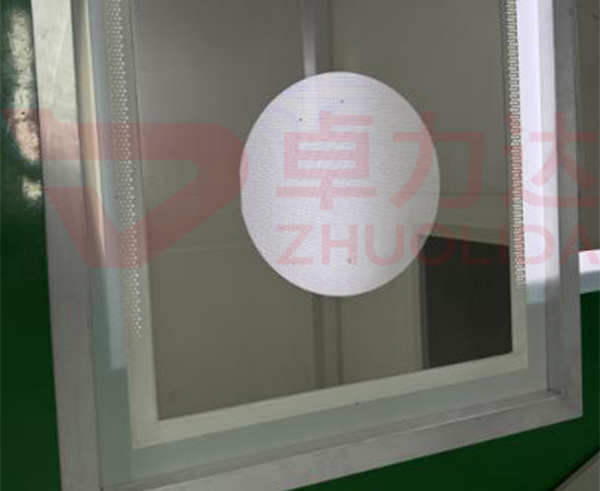
In high-end manufacturing sectors such as precision filtration, electronic component protection, ultra-fine powder screening, and precision printing, traditional woven nickel mesh and mechanically punched nickel mesh suffer from defects such as uneven thickness, residual stress, pore distortion, and surface roughness, making them ill-suited for the demands of ultra-thin, high-precision, and high-flatness applications. Electroformed thin nickel mesh, produced through a monolithic electrochemical deposition process, offers distinct advantages such as ultra-thin thickness, high flatness, uniform pore size, vertical pore walls, absence of mechanical stress, and excellent electrical conductivity and corrosion resistance. It serves as a core functional consumable for micro-medium purification, precision screening and protection, and precision manufacturing processes. The manufacturing of electroformed thin nickel mesh differs from traditional mechanical processing methods. Centered on precision photolithographic pattern transfer and low-stress electroforming deposition technology, it enables the integrated formation of ultra-thin substrates with high-density microporous arrays, thereby avoiding the tensile deformation, burr defects, and precision deviations associated with mechanical processing. Manufacturers of electroformed thin nickel mesh have specialized in the field of precision thin-gauge nickel mesh production, continuously optimizing ultra-thin forming processes and parameter systems. They have overcome technical challenges such as the susceptibility of thin mesh materials to deformation and the distortion of micro-pores, providing reliable support for the production of precision components across various industries.
The electroforming of thin nickel mesh follows a standardized, clean, and high-precision closed-loop production process, encompassing eight core steps: precision pattern master mold preparation, substrate conductive activation, ultra-thin electroforming deposition, non-destructive demolding and separation, thin mesh flattening and shaping, clean passivation and strengthening, comprehensive precision inspection, and vacuum clean packaging. The entire process is conducted in a temperature-controlled Class 100 cleanroom environment, effectively resolving industry-wide issues such as wrinkling, uneven pore sizes, surface warping, and thickness deviations commonly associated with thin nickel mesh forming. The entire electroforming process for thin nickel mesh employs a non-contact forming method, maximizing the material stability and structural integrity of the nickel mesh. This ensures that the entire sheet features micro-perforations with excellent permeability, a uniform array, and consistent thickness, making it suitable for various high-precision, high-cleanliness manufacturing applications. Electroformed thin nickel mesh manufacturers dynamically adjust the electroforming current density, chemical solution circulation speed, and deposition duration for thin nickel meshes of varying thicknesses and pore sizes, enabling stable mass production and consistent quality control across multiple specifications.
The preparation of precision photolithographic master templates is a fundamental preliminary process in electroformed thin nickel mesh manufacturing, directly determining the micro-pore precision and array regularity of the mesh. Given the ultra-thin overall thickness and precise micro-pore arrangement of electroformed thin nickel mesh, extremely high requirements are placed on the graphic precision, flatness, and stability of the master template. Therefore, high-transparency, low-deformation, and high-hardness quartz substrates must be selected to fabricate specialized master templates. Through laser micro-area direct writing, high-precision alignment exposure, and constant-temperature quantitative development and curing processes, we precisely replicate uniform micro-hole arrays, positioning references, and protective border structures. We strictly control micro-hole dimensions, hole spacing, and pattern edge accuracy to eliminate defects such as pattern distortion, residual photoresist, and uneven density. After master mold formation, comprehensive screening is conducted using high-magnification microscopic inspection equipment to eliminate non-conforming master molds with pattern deviations or surface defects, ensuring that master mold precision fully meets standards. Manufacturers of electroformed thin nickel mesh have refined the production standards for ultra-thin nickel mesh master molds and optimized the zone-specific exposure and uniform development processes, ensuring the forming precision and structural consistency of electroformed thin nickel mesh from the source.
Conductive activation and ultra-thin electroforming are the core processes in the fabrication of thin nickel mesh via electroforming, directly determining the thickness uniformity and performance of the mesh. The surface of a qualified master mold is treated with vacuum sputtering to form a uniform, dense, and highly adherent ultra-thin conductive layer. This ensures balanced current distribution across the entire surface during the electroforming process, preventing thickness inconsistencies caused by excessively fast or slow local nickel deposition. The activated master mold is placed in a sealed, temperature-controlled electroforming chamber. Using a low-stress pulsed electroforming process, the concentration, temperature, pH, and pulse parameters of the high-purity nickel electrolyte are precisely controlled to enable the slow, uniform, and dense deposition of nickel ions, resulting in the one-piece formation of an ultra-thin, flat electroformed nickel mesh with uniformly sized micropores. This forming method involves no mechanical compression or tensile stress, resulting in a flat and smooth surface. The micro-pores are vertically aligned and fully permeable, with no flaring or burrs, completely resolving the defects of deformation, pore blockage, and pore breakage commonly found in traditional thin-mesh processing. Manufacturers of electroformed thin nickel mesh continuously refine pulse electroforming process parameters to precisely control ultra-thin deposition thickness, effectively enhancing the flatness and pore precision of the mesh.
Non-destructive demolding and surface leveling are critical processes for optimizing the quality of electroformed thin nickel mesh. Due to the extremely low thickness and flexible nature of the material, the mesh is highly susceptible to wrinkling, stretching, and pore misalignment under external forces; therefore, strict control over the demolding and shaping processes is essential. After forming, a gentle, non-destructive peeling process is employed to ensure smooth separation of the thin nickel mesh from the master mold. This method completely avoids external damage such as tearing or twisting, thereby fully preserving the micro-pore array structure and surface flatness. Following demolding, low-temperature stress relief and micro-pressure leveling processes are applied to gradually release the slight residual stresses generated during forming, correcting minor warping and localized unevenness on the mesh surface. Concurrently, an ultrasonic micro-pore cleaning process is employed to thoroughly remove trace impurities and nickel particles from within the micro-pores, ensuring complete permeability and freedom from blockages throughout. Manufacturers of electroformed thin nickel mesh strictly control leveling pressure and temperature parameters to achieve precision correction while protecting the mesh structure, thereby comprehensively enhancing the structural stability of the electroformed thin nickel mesh.
Clean passivation and surface strengthening are core processes for extending the service life of electroformed thin nickel mesh. Electroformed thin nickel mesh is commonly used in high-cleanliness, acid-alkali corrosive, and high-frequency operational environments. The ultra-thin mesh surface and dense micro-pores are highly prone to adsorbing dust and medium impurities, leading to issues such as oxidation, rust, micro-pore blockage, and performance degradation over prolonged use. After shaping, the thin nickel mesh undergoes multi-stage purified water circulation rinsing, ultrasonic deep cleaning, and constant-temperature vacuum drying to thoroughly remove residual electrolyte impurities and fine dust from the mesh surface and within the micro-pores, meeting the cleanliness standards required for high-end precision manufacturing. Subsequently, through passivation for corrosion protection and anti-static reinforcement treatments, a uniform and dense protective layer is formed on the surface of the thin nickel mesh. This effectively enhances the mesh’s resistance to acid and alkali corrosion, oxidation, static electricity, and adhesion, reduces the likelihood of micro-pore blockage, and increases the product’s cycle life. Electroformed thin nickel mesh manufacturers tailor specialized surface treatment solutions to specific application conditions, thereby enhancing the mesh’s adaptability and durability for those particular environments.
Comprehensive precision inspection and clean packaging are the final steps in ensuring the quality of electroformed thin nickel mesh. Using precision equipment such as laser thickness gauges, high-precision aperture analyzers, microscopic topography analyzers, flatness testers to conduct comprehensive, full-area inspections of the thin nickel mesh’s overall thickness, thickness uniformity, micro-pore dimensions, pore spacing accuracy, surface flatness, and permeability. We strictly control micron-level tolerances and precisely screen for defects such as uneven thickness, missing micro-pores, pore size deviations, and surface imperfections. Simultaneously, simulated filtration and sieving tests are conducted to verify the thin nickel mesh’s permeability efficiency, anti-clogging performance, and precision stability. Products that pass inspection undergo anti-static vacuum packaging in a Class 100 cleanroom environment, effectively isolating them from moisture, dust, and oxidative corrosion to ensure that the mesh’s form and precision remain unchanged during storage and transportation. Electroformed thin nickel mesh manufacturers have established a comprehensive quality traceability and control system, ensuring the consistent and reliable quality of every batch of electroformed thin nickel mesh through stringent quality control standards.
With their ultra-thin, flat, high-precision, high-purity, and corrosion-resistant conductive properties, electroformed thin nickel meshes are widely used in high-end fields such as precision electronic protection, ultra-fine powder sieving, ultra-clean fluid filtration, and precision printing plate making, serving as core consumables for the micro-precision manufacturing industry. Electroformed thin nickel mesh manufacturers continuously refine ultra-thin electroforming technologies, constantly overcoming bottlenecks in achieving ultra-thin thicknesses and ultra-high-precision micro-pores to meet the refined, miniaturized, and high-purity production demands of high-end industries. These manufacturers keep pace with trends in precision manufacturing technology upgrades, continuously optimizing their process systems to support the high-quality development of the precision filtration and electronic support industries.
In applications for the protection of precision electronic components, the production of micro-electronic components requires high-cleanliness, anti-static, and high-precision protective filters to isolate fine dust impurities and static interference. Electroformed thin nickel mesh processing enables ultra-thin, lightweight forming with a flat, bump-free surface and uniformly permeable micro-pores, ensuring both airflow and precise blocking of fine dust. Electroformed thin nickel mesh offers excellent electrical conductivity, effectively dissipating static electricity and making it suitable for precision electronic manufacturing environments. Manufacturers of electroformed thin nickel mesh have optimized ultra-thin forming processes to prevent deformation of the thin mesh, ensuring long-term stable operation in electronic protection applications.
In applications involving the precision screening of ultrafine powders, the new energy and chemical industries impose stringent requirements on screening accuracy. Conventional screens are prone to issues such as particle jamming, uneven screening, and powder damage. Electroformed thin nickel mesh features vertical, smooth micro-pores with no dead corners where material can become trapped, enabling precise classification of ultrafine powders and improving particle size consistency. Electroformed thin nickel mesh features uniform thickness and minimal deformation, making it suitable for continuous screening operations. Manufacturers of electroformed thin nickel mesh optimize micro-pore structure parameters to improve screening efficiency and anti-clogging performance, meeting the mass production requirements for ultra-fine powders.
In ultra-clean fluid filtration applications, semiconductor and biopharmaceutical ultra-clean fluids require high-precision filtration of trace impurities, placing extremely high demands on filter mesh cleanliness and precision. Electroformed thin nickel mesh is manufactured under cleanroom conditions throughout the entire process, ensuring no impurity leaching and consistent pore precision. It efficiently intercepts fine impurities in fluids, guaranteeing fluid cleanliness. Electroformed thin nickel mesh is resistant to acid and alkali corrosion, making it suitable for filtering various pharmaceutical solutions and ultrapure water. Manufacturers of electroformed thin nickel mesh strictly control forming precision and cleanliness standards, providing reliable support for high-end ultra-clean fluid production.
Overall, electroformed thin nickel mesh fills the application gap left by traditional screens in ultra-thin, high-precision, and high-purity scenarios, making it an indispensable functional component for high-end precision manufacturing. Relying on mature low-stress electroforming processes, the production of electroformed thin nickel mesh effectively addresses industry pain points such as deformation, poor precision, and clogging in thin nickel mesh. Electroformed thin nickel mesh manufacturers continue to deepen their expertise in the Precision Electroforming field, constantly refining process accuracy and stability to provide robust technical support for the specialized development of industries such as precision electronics, biopharmaceuticals, new energy, and fine chemicals.
Contact:赖先生
Phone:+86 18938693450
Tel:0755-2708-8292
Email:yw9@zldsmt.com
Add:深圳市宝安区福永镇新和村福园一路华发工业园A3栋
 Zhuolida