Welcome: Shenzhen Zhuolida Electronics Co.TD
Language:
 ∷
∷

∷
∷
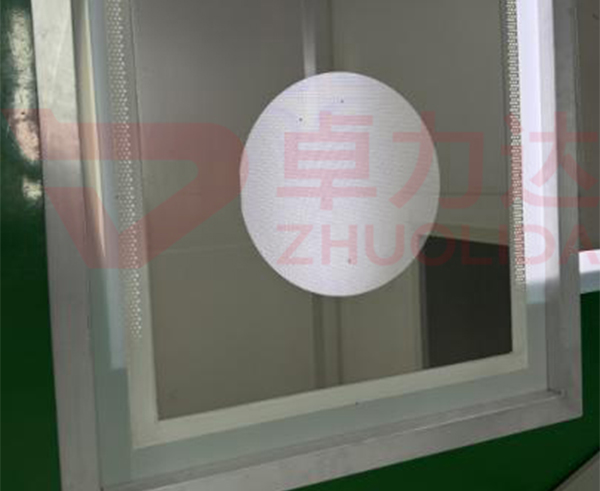
In high-end manufacturing sectors such as precision powder screening, high-purity fluid filtration, microelectronics protection, and biopharmaceutical purification, traditional woven and perforated screens suffer from shortcomings such as inconsistent pore sizes, surface deformation, residual burrs, and poor corrosion resistance, making them ill-suited for micron-level high-precision screening and high-purity filtration requirements. Precision-formed nickel mesh is manufactured using precision forming processes with high-purity nickel materials. It features high pore size consistency, vertical and smooth mesh surfaces, absence of mechanical stress, resistance to acid and alkali corrosion, and excellent electrical and thermal conductivity. It serves as a core functional component for the precise classification of fine particles, filtration of high-purity media, and protection of precision devices. The manufacturing of precision-formed nickel mesh abandons traditional mechanical forming methods, instead relying on precision microstructure replication and electrochemical forming technology. This allows for on-demand customization of pore size, mesh patterns, and surface specifications to suit various high-precision screening and filtration applications. Manufacturers of electroformed precision nickel mesh for screening have deep expertise in the field of nickel-based precision mesh materials. They continuously optimize electroforming and post-processing techniques to address technical challenges in high-precision screening applications, providing core support for industrial upgrades in precision screening and filtration across various sectors.
The precision screening and forming of nickel mesh follows a standardized, clean, and high-precision closed-loop production process. This encompasses eight core steps: high-precision master mold preparation, substrate conductive activation, pulse electroforming, non-destructive demolding and trimming, mesh surface leveling and strengthening, clean passivation treatment, comprehensive precision inspection, and anti-static packaging. The entire process is conducted in a temperature-controlled, cleanroom environment, eliminating issues such as mesh aperture misalignment, surface warping, aperture deviation, and impurity residue at the source. Throughout the manufacturing process, strict control is maintained over microstructural precision and surface flatness, ensuring the finished products are burr-free, free from tensile deformation, and feature permeable aperture walls. These products are capable of reliably supporting high-frequency, high-precision, and high-purity screening and filtration operations. Manufacturers of precision-formed nickel screens via electroforming tailor forming parameters and surface treatment processes to specific operating conditions—such as powder screening, fluid filtration, and component protection—balancing product precision, strength, and weather resistance to enable mass production and customization for diverse applications.
The preparation of high-precision photolithographic master molds is a foundational preliminary process in the manufacturing of precision-formed nickel mesh, directly determining the forming accuracy and pore uniformity of the mesh. Based on the precision requirements for screening and filtration, high-transparency, low-deformation quartz substrates are selected to create specialized master molds. Through laser direct writing, UV lithography, and precise development and curing processes, we reproduce uniform micro-pore arrays, positioning benchmarks, and protective border structures. Exposure energy, development time, and curing temperature are precisely controlled throughout the process to ensure clear mesh patterns with sharp edges, free from distortion and residual photoresist. This guarantees uniform mesh patterns and regular arrangements from the outset. After master mold formation, comprehensive screening is conducted using high-magnification microscopy to eliminate non-conforming master molds with pattern deviations or surface defects, laying a solid foundation for precision forming. Manufacturers specializing in electroforming for precision-screened nickel mesh have refined master mold production standards and optimized patterning processes for ultra-fine pore diameters and high-density mesh arrays, fully ensuring the precision forming standards of the nickel mesh.
Conductive activation and pulse electroforming are the core processes in the precision screening and forming of nickel mesh, and they determine the mesh’s core performance characteristics. The surface of a qualified master mold undergoes vacuum sputtering to form a uniform, dense, ultra-thin conductive layer, ensuring balanced current distribution across the entire surface during electroforming and preventing defects such as uneven nickel deposition and localized thickness variations. The activated master mold is placed in a sealed, temperature-controlled electroforming chamber. Using a low-stress pulse electroforming process, the composition, temperature, pH, and pulse parameters of the high-purity nickel electrolyte are precisely controlled to ensure that nickel ions deposit and grow at a uniform rate, resulting in a dense, uniform structure and a precision-formed nickel mesh produced in a single-piece process. This process involves no mechanical contact or extrusion/stretching, resulting in a flat, warp-free surface. The mesh features vertical, open pores with uniform aperture sizes, completely resolving the issues of material jamming, scraping, and uneven screening associated with traditional processes. Manufacturers of precision-screened nickel mesh continuously optimize electroforming parameters to reduce side etching during forming, enhance mesh aperture perpendicularity and smoothness, and highlight the precision forming advantages of this product.
Non-destructive demolding and mesh surface leveling are critical steps in optimizing the processing quality of precision-formed nickel mesh. After electroforming is complete, a gentle, non-destructive peeling process is used to achieve complete separation of the nickel mesh from the master mold, eliminating issues such as mesh deformation, surface wrinkling, and structural damage caused by external pulling forces. Following demolding, low-temperature stress relief and precision leveling treatments are performed to address residual micro-stresses. This releases residual forming stresses, corrects minor surface deformations, and ensures the entire nickel mesh meets flatness standards. Simultaneously, the mesh apertures undergo meticulous cleaning to remove fine nickel particles and residual impurities, guaranteeing unobstructed permeability and meeting the demands of high-precision screening and filtration. Manufacturers of precision-formed nickel screens for electroforming have refined the standards for leveling and cleaning processes, strictly controlling surface flatness tolerances to comprehensively enhance the structural stability and operational performance of these screens.
Clean passivation and functional enhancement are core processes for extending the service life of precision-formed nickel screens. Precision screening and high-purity filtration applications often involve acidic or alkaline media and humid environments. Untreated nickel mesh is prone to oxidation, rust, and surface degradation, which can compromise screening accuracy and cleanliness. After forming, the nickel mesh undergoes multi-stage purified water rinsing, ultrasonic micro-pore purification, and vacuum drying to thoroughly remove residual impurities from both the surface and within the pores, meeting high-cleanliness production standards. Subsequently, through passivation and anti-corrosion treatment, as well as surface strengthening processes, a dense protective layer is formed on the surface of the nickel mesh. This enhances resistance to acid and alkali corrosion, oxidation, and adhesion, reduces the likelihood of micro-particle adhesion, minimizes pore blockage, and significantly increases the number of reuse cycles. Manufacturers of precision-formed nickel mesh for electroforming tailor specialized strengthening processes to specific application scenarios, thereby enhancing the mesh’s operational adaptability and durability.
Comprehensive precision inspection and clean packaging serve as the final line of defense in ensuring the quality of precision-formed nickel mesh. Using precision equipment such as laser aperture measuring instruments, high-magnification microscopes, and flatness testers, we conduct comprehensive inspections of the nickel mesh’s aperture size, aperture spacing uniformity, surface flatness, and aperture wall finish. We strictly control micron-level tolerances to screen for defects such as aperture deviations, missing apertures, and surface imperfections. Simultaneously, simulated screening and filtration tests are conducted to verify the nickel mesh’s actual grading accuracy, permeability efficiency, and anti-clogging performance, ensuring the product meets the demands of high-precision operations. Nickel mesh that passes inspection is vacuum-sealed in an anti-static, clean environment to isolate it from dust, moisture, and oxidation, thereby ensuring dimensional stability during storage and transportation. Precision-formed nickel mesh Electroforming manufacturers have established a comprehensive quality traceability system. Through stringent quality control standards, they ensure consistency in batch production and consistently deliver high-quality precision-formed nickel mesh.
Precision-formed nickel mesh, with its core advantages of high precision, high purity, corrosion resistance, and stress-free properties, is widely used in high-end fields such as biopharmaceutical sieving, semiconductor fluid filtration, new energy powder classification, and precision chemical filtration. It serves as a core component for micro- and nano-scale precision sieving and filtration. The manufacturing of precision-formed nickel mesh continuously iterates on electroforming technology, constantly overcoming bottlenecks in forming ultra-fine pore sizes and high-density arrays to meet the refined production demands of high-end industries. Manufacturers of precision-formed nickel mesh via electroforming closely follow the iterative trends of the precision manufacturing industry, continuously optimizing their process systems to facilitate high-quality upgrades in the precision screening and filtration industry.
In biomedical powder screening applications, medical microspheres and pharmaceutical powders demand stringent requirements for screening precision and cleanliness; impurities and particle size deviations directly impact product quality. Precision-formed nickel mesh processing enables micron-level precise classification, with smooth, burr-free mesh apertures that prevent damage to powder particles and the shedding of impurities during the screening process. Precision-formed nickel mesh is suitable for sterile and corrosion-resistant environments, can be repeatedly sterilized for reuse, and meets biopharmaceutical production standards. Manufacturers of electroformed precision-formed nickel mesh have optimized clean forming processes to eliminate secondary contamination, ensuring the safety and stability of biopharmaceutical screening operations.
In semiconductor fluid filtration applications, wafer cleaning solutions, photolithography process fluids, and ultrapure water require high-precision purification and filtration, as even minute particulate impurities can cause defects in chip manufacturing processes. Precision-formed nickel mesh products feature uniform pore sizes and consistent permeability, enabling the precise interception of trace impurities and ensuring high-purity fluid cleanliness. Precision-formed nickel mesh exhibits excellent electrical conductivity, making it suitable for anti-static filtration applications in the semiconductor industry. Manufacturers of precision-formed nickel mesh via electroforming strictly control forming accuracy and cleanliness to meet high-end precision production standards in the semiconductor sector.
In new energy powder classification applications, battery anode and cathode powders, as well as energy storage microsphere materials, require extremely high particle size uniformity, which directly determines battery and energy storage performance. Precision-formed nickel mesh processing enables accurate powder classification, effectively removing irregularly shaped, oversized, or undersized particles to improve powder consistency. The mesh is resistant to acids and alkalis and is wear-resistant, making it suitable for continuous mass production screening of powders. Manufacturers of precision-formed nickel screens optimized the anti-clogging structure of the screen surface to improve screening efficiency and product durability, thereby helping to enhance the quality and efficiency of new energy powder processing.
Overall, precision-formed nickel screens fill the technical gap in high-precision screening left by traditional screens and serve as a key component in the high-end precision filtration and powder classification industries. Relying on a mature electroforming precision molding system, the processing of precision-formed nickel mesh has resolved industry pain points associated with traditional screens, such as deformation, low precision, and susceptibility to contamination. Manufacturers of precision-formed nickel mesh continue to specialize in the field of precision nickel material forming, continuously refining processes and improving product precision and stability, thereby providing robust support for the refined and high-quality development of high-end industries such as biopharmaceuticals, semiconductors, and new energy.
Contact:赖先生
Phone:+86 18938693450
Tel:0755-2708-8292
Email:yw9@zldsmt.com
Add:深圳市宝安区福永镇新和村福园一路华发工业园A3栋
 Zhuolida