Welcome: Shenzhen Zhuolida Electronics Co.TD
Language:
 ∷
∷

∷
∷
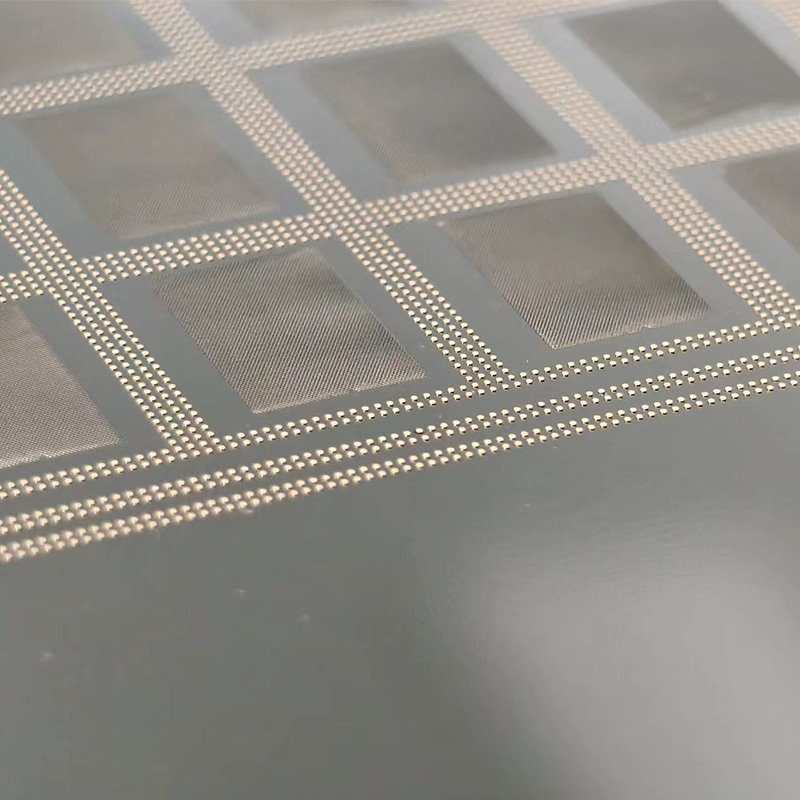
Against the backdrop of rapid advancements in the semiconductor industry toward higher density, miniaturization, and greater reliability, precision semiconductor ball-mounting stencils—as core components in the chip packaging process—directly determine the yield and performance of chip ball mounting through their machining precision and stability. Leveraging its unique process characteristics, electroforming for precision semiconductor ball grid arrays has overcome the limitations of traditional manufacturing techniques, becoming the mainstream processing method in the high-end semiconductor packaging sector. This has also driven manufacturers of precision semiconductor ball grid array electroforming to upgrade toward greater refinement and specialization, providing core support for the high-quality development of the semiconductor industry.
Electroforming of precision semiconductor ball grid arrays is a specialized processing technology based on the principle of electrolytic deposition, which precisely deposits metal ions onto the surface of a pre-designed mold to form high-precision, highly consistent ball grid arrays. Compared to traditional processing methods such as laser cutting and etching, precision semiconductor ball grid array (BGA) steel mesh electroforming offers irreplaceable advantages in terms of precision control, structural integrity, and performance stability. It has become the core solution for meeting the high-quality demands of high-end chip packaging for BGA steel meshes, as well as a key technological pillar for manufacturers to enhance their core competitiveness.
The core advantage of Precision Electroforming for semiconductor ball grid arrays lies first and foremost in ultra-high-precision dimensional control. As semiconductor chip packaging evolves toward ultra-fine pitch and micro-bump technologies, it imposes extreme demands on the aperture size, positional accuracy, and wall smoothness of ball grid arrays. Electroforming enables dimensional accuracy control at the ±1μm level, and can even achieve nanometer-level precision. It precisely meets the requirements for ball placement with ultra-fine pitches of less than 100μm, keeping aperture size errors within the smallest possible range. This effectively avoids issues such as aperture misalignment and uneven aperture diameters that occur with traditional processing methods. Additionally, the hole walls formed through electroforming exhibit extremely high smoothness, with a surface roughness of less than Ra 0.05 μm, free of burrs and scratches. This significantly improves solder paste release efficiency, reduces solder ball residue, and minimizes defects such as bridging and solder deficiency during the chip balling process, thereby substantially increasing balling yield. This is the core competitive advantage of electroforming for precision semiconductor balling stencils compared to traditional manufacturing processes.
Second, the electroforming process for precision semiconductor ball-mounting steel meshes offers excellent structural consistency and stability. By utilizing electrolytic deposition to achieve uniform metal layer growth, the electroforming process ensures consistent overall thickness and stable tension across the mesh, thereby avoiding issues such as deformation and tension loss caused by uneven material stress in traditional manufacturing methods. Electroformed ball grid arrays feature high tensile strength and fatigue resistance. During long-term, high-frequency ball placement operations, they maintain dimensional stability and are resistant to breakage and deformation. Their service life is 3–5 times longer than that of traditionally processed steel meshes, effectively reducing consumable replacement costs for semiconductor packaging companies and improving production efficiency. Furthermore, electroforming offers flexible customization to meet the needs of steel meshes with varying specifications and aperture sizes. Whether dealing with complex aperture arrays or specialized aperture designs, the process can precisely replicate mold shapes to accommodate the ball placement requirements of different chip models, providing manufacturers of precision semiconductor ball placement steel meshes with greater production adaptability.
Additionally, the electroforming of precision semiconductor ball placement steel meshes offers the advantages of environmental friendliness, high efficiency, and controllable costs. The electroforming process does not require high temperatures or high pressure, resulting in low energy consumption. Furthermore, the electrolyte can be recycled, and there are no emissions of pollutants such as wastewater or exhaust gases, aligning with the green manufacturing trends in the semiconductor industry. At the same time, electroforming eliminates the need for complex post-processing steps such as polishing and correction, simplifying the manufacturing workflow and increasing production efficiency. It enables mass production with exceptional product consistency, effectively reducing defect rates during production and controlling overall production costs. For manufacturers of precision semiconductor ball-mounting steel mesh electroforming, the large-scale application of electroforming processes can increase production capacity, reduce unit costs, and enhance product competitiveness in the market.
As the semiconductor industry continues to upgrade, the application areas of precision semiconductor ball-mounting steel mesh electroforming are constantly expanding, covering multiple core scenarios in high-end chip packaging and becoming a key driver for the industry’s advancement toward high-end development. Among these, the advanced packaging sector represents the core application scenario for precision semiconductor ball grid array (BGA) electroforming. In the packaging of high-end chips such as 5G chips, AI chips, and autonomous driving chips, the extremely high integration density, minimal ball pitch, and vast number of solder balls necessitate exceptionally high precision and stability in the BGA stencils. Precision semiconductor ball grid array electroforming perfectly meets the demands of advanced packaging processes such as FC-BGA, CSP, SiP, and 2.5D/3D, enabling precise ball placement with ultra-fine spacing and micro-bumps. This ensures the electrical connectivity and mechanical reliability of the chips, making it an indispensable key component in the advanced packaging process.
The memory chip sector is another critical application area for precision semiconductor ball grid array electroforming. With the surge in data storage demand, high-end storage products such as HBM memory chips are evolving toward higher density and capacity, driving ever-increasing requirements for ball placement precision and consistency. Precision electroforming of semiconductor ball grid arrays enables ultra-fine pitch ball placement at 100μm, ensuring uniform ball size and neat alignment. This effectively enhances the read/write speed and stability of memory chips, meeting the demand for high-end memory chips in fields such as big data and cloud computing. Meanwhile, in the consumer electronics chip sector, the continuous miniaturization and thinning of chips in end products such as smartphones, tablets, and laptops have also placed higher demands on the precision and dimensions of balling stencils. Stencils produced through precision semiconductor balling stencil electroforming can meet the balling requirements of miniaturized chips, facilitating the upgrade of consumer electronics toward thinner, lighter, and higher-performance designs.
Furthermore, precision semiconductor ball grid array (BGA) steel mesh electroforming is widely applied in high-end sectors such as automotive electronics, medical electronics, and aerospace. In the automotive electronics sector, chips for autonomous driving and in-vehicle control systems demand extremely high reliability and stability. Electroformed BGA steel meshes maintain stable performance under harsh conditions—including high temperatures, high humidity, and vibration—ensuring the normal operation of in-vehicle chips; In the medical electronics sector, the packaging of high-precision medical device chips requires extremely high ball placement accuracy to ensure the devices’ diagnostic accuracy and reliability; precision electroformed semiconductor ball placement stencils can meet these stringent requirements; In the aerospace sector, the packaging of high-end aerospace chips demands exceptional precision, stability, and resistance to harsh environments from ball placement stencils. Electroformed ball placement stencils can adapt to the unique packaging requirements of aerospace chips, ensuring the stable operation of aerospace electronic equipment.
Currently, the semiconductor industry is in a golden age of rapid development. As chip packaging technologies continue to evolve and upgrade, the quality requirements for precision semiconductor balling stencils are constantly rising, presenting both new opportunities and challenges for manufacturers specializing in electroforming precision semiconductor balling stencils. Thanks to its advantages of ultra-high precision, high consistency, long service life, and environmental friendliness, electroforming has become the core processing method for high-end semiconductor ball grid arrays, and its application areas will continue to expand alongside the upgrading of the semiconductor industry. In the future, with continuous innovation and breakthroughs in electroforming technology, the electroforming of precision semiconductor ball grid arrays will evolve toward higher precision, greater efficiency, and greater environmental sustainability. This will further drive the advancement of semiconductor packaging technology and provide even stronger support for the high-quality development of the global semiconductor industry.
Contact:赖先生
Phone:+86 18938693450
Tel:0755-2708-8292
Email:yw9@zldsmt.com
Add:深圳市宝安区福永镇新和村福园一路华发工业园A3栋
 Zhuolida