Welcome: Shenzhen Zhuolida Electronics Co.TD
Language:
 ∷
∷

∷
∷
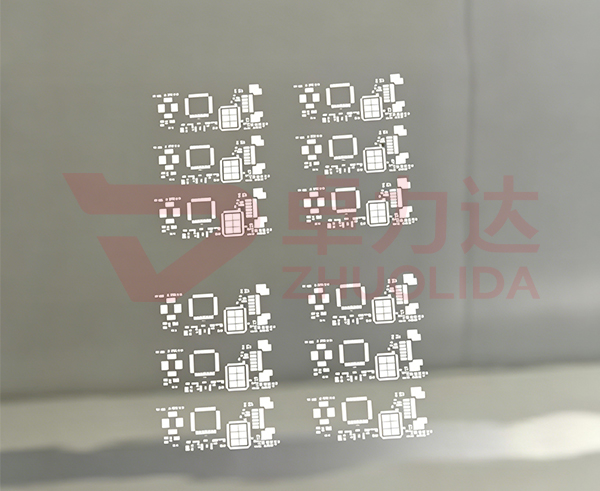
With the rapid evolution of high-end industries such as precision powders, semiconductor packaging, biopharmaceuticals and optical materials, the precision requirements for micro- and nano-scale particle classification and screening continue to rise. Traditional woven and etched screens are no longer able to meet the demands for damage-free, highly uniform screening of ultrafine particles; as a result, electroformed ultra-precision screens are gradually becoming a core functional component in the field of high-end precision screening. Manufactured using pulse electroforming precision moulding technology, electroformed ultra-precision sieve meshes offer high pore size consistency, vertical and smooth pore walls, burr-free edges, zero internal stress, and excellent surface flatness. They are capable of reliably handling the classification, filtration, and separation of micron- and sub-micron-scale particles, making them the preferred choice for high-precision sieving applications. The manufacturing of electroformed ultra-precision screens employs a stress-free, integrated forming process, eliminating the technical shortcomings of traditional machining and standard chemical etching. Pore size, pore spacing patterns, plate thickness and structural configurations can be customised to suit different screening scenarios, meeting the mass production and experimental testing requirements for various high-end precision powders. The electroformed ultra-precision sieve mesh manufacturing company specialises in the field of Precision Electroforming, continuously optimising electrolyte formulations, pulse parameters and clean production systems. It consistently overcomes bottlenecks in the forming precision of ultra-fine sieve meshes, providing reliable technical support for the upgrading of precision sieving processes across various industries.
The electroformed ultra-precision sieve mesh manufacturing process features a standardised, clean and high-precision closed-loop production workflow, comprising eight core processes: substrate master mould preparation, conductive layer plating, pulse electroforming, non-destructive demoulding, precision post-processing, stress relief, comprehensive precision inspection, and clean packaging. The entire process is conducted in a Class 100 cleanroom with constant temperature control, effectively mitigating common issues such as aperture deviation, panel warping, micro-pore blockage and surface defects. Electroformed ultra-precision screen processing differs from conventional screen processing in its strict control of micro-pore perpendicularity, array uniformity and panel flatness, ensuring screening accuracy and repeatability from the very outset of the process. Our electroformed ultra-precision screen mesh manufacturing company develops bespoke process solutions tailored to ultra-fine particles, high-cleanliness environments and high-frequency screening scenarios. By optimising low-defect, high-durability forming processes, we ensure that our electroformed ultra-precision screen meshes are suitable for a wide range of demanding high-end production environments, significantly improving the yield rate and quality consistency of precision powder products.
The preparation of high-precision master moulds and the pre-treatment of substrate materials are fundamental preliminary processes in the electroforming of ultra-precision screens, and directly determine the forming accuracy of the screens. High-transparency, low-deformation, high-flatness quartz material is selected as the master mould substrate. Through laser direct writing and UV lithography processes, uniform micro-pore arrays, positioning benchmarks and frame structures are precisely replicated. Exposure, development and curing parameters are strictly controlled to ensure that the pattern contours are regular, free from distortion and devoid of residual photoresist. Upon completion, the master mould undergoes comprehensive high-magnification microscopic inspection to eliminate non-conforming master moulds with pattern deviations or surface defects, ensuring the master mould meets precision standards. Subsequently, the surface of the master mould undergoes a cleaning and activation process to remove dust and impurities, providing an optimal foundation for the adhesion of the conductive layer. Our electroforming ultra-precision screen mesh manufacturing company strictly standardises master mould production criteria and refines every pre-treatment process, eliminating forming defects at source to lay a solid foundation for high-precision electroforming ultra-precision screen mesh processing.
Vacuum conductive coating and pulse electroforming are the core processes in the production of electroformed ultra-precision screens, determining the screens’ core performance characteristics. In a clean environment, qualified master moulds undergo vacuum sputtering to deposit a uniform, dense, ultra-thin conductive metal layer. This ensures balanced current distribution across the entire surface during electroforming, preventing issues such as localised deposition irregularities and thickness deviations. The conductive, activated master mould is placed in a temperature-controlled, sealed electroforming chamber. Using a low-stress pulsed electroforming process, the electrolyte composition, temperature, pH and pulse current parameters are precisely controlled to ensure the metal ions are deposited at a uniform rate, resulting in a dense and even structure. This process effectively relieves internal metal stresses, resulting in a flat, warp-free surface on the finished screen plate. The micropores are vertical and regular, with uniform pore sizes and smooth walls, free from flaring or burrs, thereby completely resolving issues such as ultra-fine particles becoming lodged in the pores, scratches, and uneven sieving. Leveraging mature pulsed electroforming technology, our company consistently maintains precision in microstructure formation, fully utilising the process advantages of high precision and stability inherent in electroformed ultra-precision screens.
Non-destructive demoulding and clean strengthening treatments are crucial steps in optimising the performance of finished electroformed ultra-precision screen mesh products. Upon completion of the electroforming process, a gentle, non-destructive demoulding process is employed to achieve complete separation of the screen mesh from the master mould, thereby eliminating issues such as micro-hole deformation, surface warping and structural damage caused by external pulling forces. Following demoulding, the screens undergo a sequence of multi-stage purified water rinsing, ultrasonic micro-pore dust removal, plasma purification and vacuum drying to thoroughly remove residual metal particles, electrolyte impurities and dust from within the micro-pores and on the surface, fully meeting the high-cleanliness production standards required in high-end applications. Depending on the product’s operating conditions, targeted processes such as electrolytic polishing, passivation for corrosion protection, and stress-relief treatment are carried out to enhance the surface finish, corrosion resistance and structural strength of the screen mesh, reduce the adhesion rate of fine particles, and effectively improve the service life and screening stability of the screen mesh. The electroformed ultra-precision screen mesh manufacturer refines post-processing parameters and reinforces high-cleanliness and high-durability treatment standards, comprehensively enhancing the compatibility and reliability of finished electroformed ultra-precision screen mesh products.
Comprehensive precision inspection and clean packaging are the final stages in ensuring the quality of electroformed ultra-precision screen mesh processing. Equipped with precision instruments such as laser aperture analysers, high-magnification microscopes, flatness testers and aperture uniformity analysers, we conduct comprehensive precision inspections of the screen’s aperture dimensions, aperture spacing accuracy, array uniformity, panel flatness and aperture wall finish. We strictly control tolerances at the micron level to ensure that all micro-aperture parameters fully comply with precision screening standards. Simultaneously, simulated sieving tests are conducted to verify the actual grading performance of the screens, thereby preventing products with accuracy deviations or poor sieving performance from leaving the facility. Finished products that pass inspection undergo anti-static vacuum packaging in a Class 100 cleanroom environment, isolating them from dust, moisture and oxidative corrosion to ensure structural and dimensional stability during storage and transport. The electroformed ultra-precision sieve mesh manufacturing company has established a comprehensive quality traceability system, using rigorous testing standards to guarantee batch consistency and stability in the production of electroformed ultra-precision sieve meshes.
Leveraging core advantages such as high precision, high cleanliness, stress-free operation and non-damaging material handling, electroformed ultra-precision screens are widely used in fields such as semiconductor microsphere sorting, biopharmaceutical powder screening and high-end optical microsphere classification, serving as indispensable core components in high-end precision powder manufacturing. Electroformed ultra-precision sieve mesh manufacturing continuously iterates on process technologies, constantly pushing the boundaries of ultra-micro-pore formation to align with industry trends towards the miniaturisation and high precision of powder materials. The company focuses on the requirements of high-end sieving applications, continuously optimising its process systems to drive the ongoing advancement of electroformed ultra-precision sieve mesh towards ultra-micro, ultra-precise and high-durability specifications.
In the case of microsphere sieving for semiconductor packaging, semiconductor solder microspheres and insulating microspheres demand extremely high standards of particle size uniformity and surface integrity; minute particle impurities and deviations in particle size directly impact chip packaging yield and reliability. Electroformed ultra-precision screens enable sub-micron precision screening with uniform and consistent pore sizes. The screening process is free from particle blockages and surface scratches, effectively producing semiconductor microspheres of uniform specifications. Through refined structural design, electroformed ultra-precision screen processing is adapted to the high-cleanliness production conditions of the semiconductor industry, ensuring no dust or impurity residues. Electroformed ultra-precision screen mesh manufacturers strictly adhere to semiconductor-grade production standards, ensuring the purity and consistency of the screened microspheres, thereby supporting the mass production of high-end chip packaging whilst enhancing quality and efficiency.
In the context of biopharmaceutical powder sieving, medical microspheres and reagent microspheres directly impact the accuracy of biological testing and the stability of pharmaceutical agents, necessitating stringent requirements for screen cleanliness, non-toxicity and high precision. Electroformed ultra-precision screens feature a smooth, seamless surface that resists the adhesion of microorganisms and powder residues, thereby meeting the sterile sieving requirements for medical powders. Electroformed ultra-precision mesh manufacturing optimises clean forming processes, completely eliminating the risk of contaminant residue throughout the entire process, thereby meeting the stringent quality control standards of the biopharmaceutical industry. Manufacturers of electroformed ultra-precision mesh refine their clean process controls to ensure the safe and stable use of the mesh, providing reliable support for the production of precision powders in the biopharmaceutical sector.
In applications involving the classification of high-end optical microspheres, optical glass microspheres and light-transmitting microspheres require extremely high surface integrity; traditional sieves can easily cause issues such as microsphere abrasion, chipped edges and reduced light transmittance. Electroformed ultra-precision sieves feature smooth, vertical pore walls free from burrs; the sieving process does not damage the microspheres’ surface structure, thereby fully preserving the optical microspheres’ light transmittance and visual quality. Electroformed ultra-precision sieve mesh processing optimises micro-pore taper and array layout to enhance sieving flow and eliminate material jamming and accumulation. Manufacturers of electroformed ultra-precision sieve mesh continuously refine their forming processes to produce sieves with high uniformity, meeting the precision mass production requirements of high-end optical materials.
Overall, electroformed ultra-precision sieves effectively address the shortcomings of traditional sieves—such as low precision, susceptibility to deformation and material damage—making them a core supporting product for the modern high-end precision powder industry. With their stress-free, high-precision and high-purity process characteristics, electroformed ultra-precision sieves continuously adapt to the evolving requirements of high-end sieving applications across various sectors. With technological innovation at its core, the electroformed ultra-precision screen mesh processing company continuously refines its precision electroforming processes, constantly enhancing product accuracy and stability, thereby providing robust process assurance for the high-quality development of domestic high-end industries such as precision powders, semiconductors and biopharmaceuticals.
Contact:赖先生
Phone:+86 18938693450
Tel:0755-2708-8292
Email:yw9@zldsmt.com
Add:深圳市宝安区福永镇新和村福园一路华发工业园A3栋
 Zhuolida