Welcome: Shenzhen Zhuolida Electronics Co.TD
Language:
 ∷
∷

∷
∷
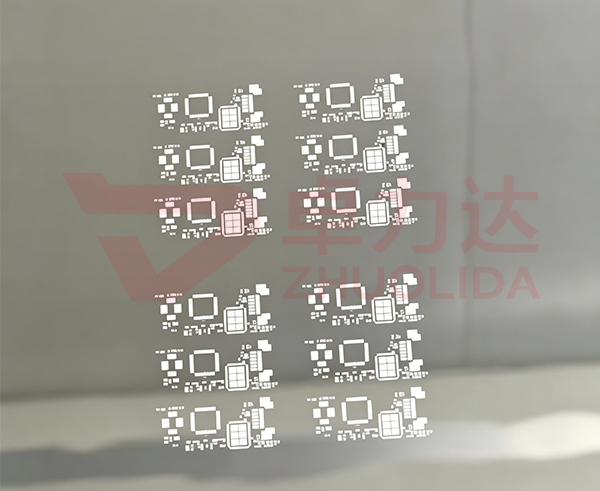
Microsphere sieve meshes are core functional components in the fields of precision sieving, sorting and filtration. They are primarily used for the precise grading, screening, filtration and separation of micron-sized microspheres, and are widely applicable in production and quality control scenarios for precision powder materials such as polymer microspheres, glass microspheres, ceramic microspheres and semiconductor microspheres. Manufactured using precision etching and microstructure forming processes, microsphere sieve meshes enable the integrated formation of ultra-thin substrates, high-density uniform micro-pores and high-precision pore arrays. They offer advantages such as high pore size consistency, smooth pore walls, burr-free surfaces, stable sieving accuracy and resistance to clogging, thereby completely resolving the industry challenges associated with traditional woven sieve meshes, such as inconsistent pore sizes, significant deformation and high sieving errors. Microsphere screen mesh processing allows for the customisation of pore sizes and array layouts according to microsphere particle size, meeting diverse production requirements such as scientific research, high-end powder mass production, and precision filtration. Microsphere screen manufacturers specialise in precision micro-hole forming technology, continuously optimising process parameters to enhance the accuracy and stability of microsphere screening. These companies have established standardised precision production systems that meet the stringent quality standards for high-end microsphere screening across various industries, providing vital support for the development of the precision powder industry.
The overall micro-sphere sieve mesh manufacturing process is rigorous and meticulous, employing a stress-free precision forming procedure. It comprises eight key stages: substrate selection, substrate surface pre-treatment, photolithographic pattern transfer, precision micro-hole etching, de-moulding and cleaning, levelling and strengthening, comprehensive precision inspection, and clean packaging and delivery. Production takes place entirely within a clean, temperature-controlled environment, effectively preventing issues such as screen deformation, pore size deviations, micro-pore blockages and surface defects. To meet the screening requirements of microspheres of varying particle sizes, the manufacturer specifically adjusts the micro-pore taper, pore spacing and plate thickness, ensuring smooth screening without material jamming and high classification accuracy. Microsphere sieve mesh manufacturers continuously upgrade their automated forming equipment and inspection systems, optimising low-corrosion and high-flatness forming technologies. This enables the production of microsphere sieve meshes suitable for ultra-fine, high-precision and high-density microsphere sieving applications, significantly enhancing the quality of mass-produced high-end powder materials.
The selection of base materials and surface pre-treatment are fundamental preliminary processes in microsphere sieve mesh manufacturing, directly determining the flatness and operational stability of the sieve mesh. During the manufacturing stage, priority is given to corrosion-resistant, high-strength, and high-flatness precision thin sheets of stainless steel and nickel alloys. Sheet thickness is selected according to the precision requirements of microsphere sieving, whilst the surface flatness, thickness uniformity, and oxidation status of the sheets are rigorously screened to eliminate substandard substrates with severe warping, oxidation, or scratches. The pre-treatment process involves, in sequence, alkaline degreasing, ultrasonic deep cleaning, plasma activation and micro-etching levelling. This thoroughly removes oil, oxide layers and minute impurities from the sheet surface, enhancing surface cleanliness and coating adhesion, and preventing subsequent defects such as pattern peeling, uneven etching and micro-pore deformation. Microsphere screen mesh manufacturers strictly adhere to graded pre-treatment standards, incorporating a tension levelling process for ultra-thin screen mesh substrates to eliminate deformation issues at source. These manufacturers refine pre-treatment parameters to ensure consistent and stable substrate conditions, laying a solid foundation for high-precision microsphere screen mesh processing.
The precise transfer of photolithographic patterns is a critical step in ensuring the accuracy of pore sizes during the manufacture of microsphere screens. In a Class 1,000 cleanroom environment, photoresist is uniformly applied to the pre-treated substrate or a precision dry film is laminated onto it, ensuring that the coating is uniform and free from bubbles and pinholes, thereby providing a stable substrate for the reproduction of the micro-pore patterns. Based on the process parameters for microsphere sieving, micro-pore array drawings are designed and high-precision film negatives are produced. Through precise alignment, uniform UV exposure and constant-temperature quantitative development, the regular micro-pore arrays, positioning references and border structures are accurately transferred onto the metal plate surface, forming a uniform, corrosion-resistant protective layer. Following development, the film undergoes low-temperature curing and manual re-inspection to ensure that the micro-hole patterns have clear contours, are evenly distributed, and are free from residual adhesive and pattern distortion. Microsphere screen manufacturers precisely control exposure energy, development duration and alignment accuracy to strictly limit errors in the micro-hole array. These manufacturers employ global alignment calibration technology to ensure consistency across the entire screen, effectively enhancing the overall precision and screening stability of the microsphere screen.
Precision micro-hole etching is the core process in microsphere screen manufacturing, directly determining the screen’s performance. Workpieces with the pattern transferred are placed into automated, sealed spray etching equipment. A specialised low-side-etch solution is formulated according to the substrate material, and the etching temperature, spray pressure, solution circulation speed and etching time are precisely controlled. A dual-sided synchronous spray process ensures that exposed metal areas are uniformly corroded and dissolved, forming a micro-pore structure with vertical, regular walls and uniform pore sizes. Through segmented, precision-controlled etching, lateral etching of the micro-pores is effectively minimised, ensuring smooth, vertical pore walls free from burrs or flaring. This prevents issues such as micro-spheres becoming lodged in the pores, scratches, and misjudgement of particle size. The entire forming process involves no mechanical contact and generates no processing stress, ensuring the screen remains flat and distortion-free, suitable for long-term, repeated use in screening applications. Microsphere screen manufacturers rely on mature chemical solution formulation technology to balance forming precision with processing efficiency. Through intelligent parameter control systems, these companies ensure a high degree of consistency in pore size across batch production, fully demonstrating the process advantages of high precision and stability in microsphere screen manufacturing.
Film removal, cleaning and surface treatment are crucial processes for optimising the performance of finished microsphere screens. Following etching and forming, a gentle demoulding process is employed to thoroughly remove any residual photoresist from the plate surface, revealing a complete and uniform micro-pore array structure. Subsequently, through multi-stage purified water rinsing, ultrasonic micro-pore dust removal and vacuum drying, metal debris, chemical impurities and fine dust remaining inside the micro-pores and on the plate surface are thoroughly eliminated, ensuring the screen meets cleanliness standards. Depending on application requirements, electrolytic polishing, passivation for corrosion protection, and surface levelling and strengthening treatments can be performed to enhance the screen’s surface finish, corrosion resistance and structural strength, reduce microsphere adhesion rates, and improve the screen’s durability and service life. Microsphere screen manufacturers prioritise enhancing the smoothness of micro-pores for ultra-fine microsphere sieving applications, thereby eliminating pore blockage. Micro-sphere screen mesh manufacturers have refined their post-processing standards to comprehensively improve the compatibility and service life of finished products.
Comprehensive precision inspection and clean packaging constitute the final stage in controlling the quality of micro-sphere screen mesh prior to dispatch. Precision equipment such as laser aperture analysers, high-magnification microscopes, flatness testers and aperture uniformity analysers is utilised to conduct comprehensive inspections of mesh aperture dimensions, aperture spacing accuracy, array uniformity, panel flatness and aperture wall smoothness. Micron-level tolerances are strictly controlled to ensure that every micro-aperture parameter complies with microsphere screening standards. Simultaneously, sieving simulation tests are conducted to verify the actual classification performance of the screens, thereby preventing products with accuracy deviations from leaving the factory. Qualified finished products undergo anti-static vacuum packaging in a clean environment, isolating them from dust, moisture and oxidation to ensure stable accuracy during transport and storage. Micro-sieve manufacturers have established a comprehensive quality traceability system, enabling controllable and verifiable quality. The microsphere sieve mesh manufacturer enforces stringent inspection standards to ensure that finished products meet the requirements of various high-end powder production applications.
Thanks to their uniform pore size, smooth pore walls, stress-free structure and high durability, microsphere sieve meshes are widely used in high-end fields such as biopharmaceutical microspheres, optical microspheres, semiconductor microspheres and new powder materials. They serve as a core process component for the precise grading, filtration, screening and quality control of microspheres. Microsphere screen mesh manufacturers are continuously optimising microstructure forming processes, constantly pushing the boundaries of ultra-fine pore size processing. These companies keep pace with trends in the new materials industry, continuously iterating their technologies to drive the advancement of microsphere screen mesh processing towards higher precision, greater uniformity and longer service life.
In the context of biopharmaceutical microsphere sieving, medical microspheres require extremely high precision in particle size, as even the slightest deviation can directly affect reagent stability and testing accuracy. High-precision sieves manufactured using microsphere sieve mesh feature uniform and consistent pore sizes, enabling the precise screening of standardised medical microspheres and the effective removal of oversized, undersized, or irregularly shaped particles. Microsphere sieve mesh manufacturers optimise their clean production processes to ensure that the sieves are free from impurities and contamination. Microsphere sieve manufacturers strictly control pore size tolerances to guarantee the purity and consistency of medical microsphere sieving.
In optical microsphere grading applications, optical glass microspheres and light-transmitting microspheres demand stringent requirements for surface integrity and particle size uniformity. Traditional sieves are prone to issues such as material jamming and scratching the microsphere surface. High-precision microsphere sieve manufacturing achieves a smooth, burr-free micro-pore structure, ensuring the sieving process does not damage the microsphere surface, thereby safeguarding the light transmission performance and aesthetic quality of optical microspheres. Microsphere screen manufacturers optimise the taper design of the micropores to improve the smoothness of the screening process. Leveraging their precision forming capabilities, these companies meet the high-end production standards for optical materials.
In semiconductor powder screening applications, microspheres for semiconductor packaging and insulating microspheres require ultra-high uniformity in screening, with extremely stringent demands on screen precision and cleanliness. The micro-sphere sieve mesh products manufactured by these companies feature consistent pore sizes and are free from dust residue, meeting the high-precision grading requirements for semiconductor microspheres and effectively enhancing chip packaging stability. Micro-sphere sieve mesh manufacturers have strengthened ultra-clean processes to meet the stringent standards of the semiconductor industry. These companies continuously upgrade their processes to support the precision mass production of new semiconductor materials.
Overall, microsphere screen mesh processing is an indispensable supporting process in high-end precision powder manufacturing, addressing industry pain points such as the insufficient precision, susceptibility to deformation and tendency to clog pores associated with traditional screens. Microsphere screen mesh manufacturers drive process upgrades through technological innovation, continuously improving the precision of micro-pore formation. Relying on comprehensive production and quality control systems, these companies continually enhance product stability and compatibility, thereby empowering the high-quality development of the precision microsphere new materials industry.
Contact:赖先生
Phone:+86 18938693450
Tel:0755-2708-8292
Email:yw9@zldsmt.com
Add:深圳市宝安区福永镇新和村福园一路华发工业园A3栋
 Zhuolida