Welcome: Shenzhen Zhuolida Electronics Co.TD
Language:
 ∷
∷

∷
∷
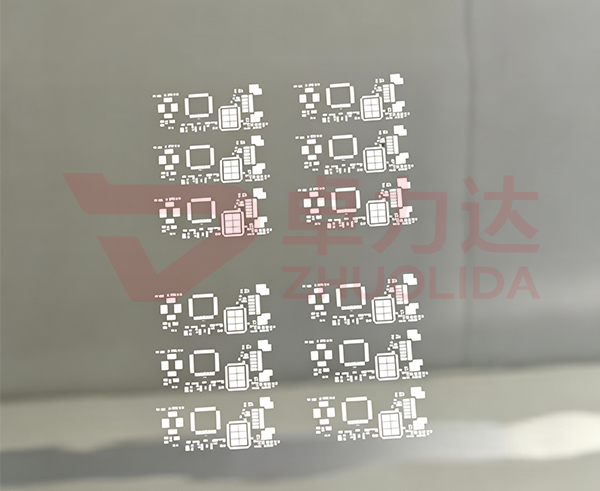
As advanced semiconductor packaging and wafer testing technologies continue to evolve and chip integration levels keep rising, probe positions in wafer-level testing are becoming increasingly dense and spacing is continuously shrinking. Consequently, issues with traditional positioning fixtures—such as insufficient precision, significant alignment deviations, and susceptibility to damaging wafer dies—are becoming increasingly apparent. Wafer test probe positioning templates are core precision auxiliary components for semiconductor wafer electrical testing, functional calibration, and yield screening. They precisely constrain probe movement and fix the probe array position, effectively preventing issues such as probe misalignment, poor contact, and wafer surface damage, thereby significantly improving the accuracy and stability of wafer testing. Custom wafer test probe positioning templates can be designed with personalized structures based on the wafer size, probe pitch, test point layout, and equipment operating parameters of different chip types, making them suitable for high-end wafer testing scenarios involving high density, fine pitch, and multiple arrays. Electroforming for wafer test probe positioning templates relies on a low-stress pulse electroforming process. Unlike traditional methods such as etching and laser cutting, this process offers advantages including a flat surface, vertical micro-holes, no burrs, and no internal stress, making it the mainstream manufacturing process for high-precision wafer test positioning templates today.
The electroforming process for wafer test probe positioning templates follows a standardized, cleanroom-compliant, and high-precision closed-loop production workflow. This encompasses customized design, precision master mold fabrication, conductive layer plating, pulse electroforming, non-destructive demolding and trimming, cleanroom strengthening treatment, comprehensive precision inspection, and anti-static packaging and delivery. The entire process is conducted in a Class 100 cleanroom environment, effectively ensuring dimensional accuracy, structural strength, and batch consistency of the templates. Throughout the manufacturing process, microstructural precision and surface flatness are strictly controlled, enabling the templates to accommodate high-frequency, long-duration, and continuous wafer testing operations, thereby effectively reducing false positive rates and wafer scrap rates. Custom wafer test probe positioning templates are tailored to the testing requirements of various wafer types, including logic chips, power chips, sensor chips, and AI chips. We flexibly optimize microvia layouts, positioning references, and reinforcement structures to address the challenges of differentiated testing processes. Our mature process system enables electroforming for wafer test probe positioning to simultaneously meet the needs of both small-batch production for research samples and high-end wafer mass production, providing core support for improving quality and efficiency in the semiconductor packaging and testing industry.
Requirement alignment and solution design are the primary core steps in customizing wafer test probe positioning templates, and they are also the fundamental prerequisites for ensuring the templates are compatible with high-end testing conditions. Prior to formal manufacturing, key parameters such as wafer specifications, die layout, probe diameter, test pitch, equipment alignment accuracy, and test pressure are taken into account to specifically design the template thickness, positioning micro-hole diameters, array spacing, positioning hole locations, and stress relief zones. For demanding scenarios such as ultra-fine pitch, high-density probe arrays, and ultra-thin wafer testing, we optimize micro-hole taper and surface stress distribution to prevent issues such as probe jamming, alignment shifts, and board deformation. Through process simulation and parameter verification, we validate the feasibility and stability of customized solutions, producing standardized production drawings that provide precise data for the electroforming of wafer test probe positioning. This ensures optimal compatibility between the template and the wafer testing process from the outset.
High-precision master mold fabrication is a critical preliminary process for ensuring the accuracy of electroforming for wafer test probe positioning. Insulating master molds are manufactured using quartz substrates with high flatness, low deformation, and high light transmittance to meet the requirements of ultra-precise microstructure formation. Using laser direct writing and UV lithography processes, we precisely replicate micro-patterns such as probe positioning micro-hole arrays, precision alignment grooves, reference positioning holes, and clearance structures. We strictly control exposure accuracy, development rates, and curing parameters to ensure regular pattern contours, sharp edges, and the absence of residual photoresist or distortion. After master mold fabrication, comprehensive screening is performed using high-magnification microscopes and precision dimensional measuring instruments to eliminate non-conforming master molds with issues such as positional shifts, pattern defects, or surface scratches. This high-standard master mold preparation process fully leverages the structural advantages of custom-made wafer test probe positioning templates, laying a solid foundation of precision for subsequent precision molding.
Conductive activation and pulse electroforming are the core processes in the electroforming of wafer test probe positioning templates. The surface of qualified master molds undergoes vacuum sputtering to form a uniform, dense, ultra-thin conductive metal layer, ensuring balanced current distribution across the entire surface during electroforming and preventing defects such as localized deposition irregularities and thickness variations on the plate surface. The pre-treated master mold is placed in a temperature-controlled, sealed electroforming chamber. Using low-stress pulse electroforming technology, the electrolyte composition, temperature, pH, and pulse current parameters are precisely controlled to ensure that metal ions deposit at a uniform rate, resulting in a dense and even structure. This process effectively relieves internal metal stresses, resulting in a formed wafer test probe positioning template with a flat, warp-free surface. The micro-holes are vertically aligned, uniform in diameter, and feature smooth walls, eliminating the need for secondary mechanical finishing. The template precisely matches the probe’s movement trajectory, preventing testing stuttering and alignment errors, and fully demonstrating the precision advantages of the process.
Non-destructive demolding and clean strengthening treatment are critical processes for enhancing the performance of wafer test probe positioning templates. After electroforming is complete, a gentle, non-destructive demolding process is used to completely separate the template from the master mold, eliminating issues such as micro-hole deformation, board warping, and structural damage caused by external pulling forces. Following demolding, the template undergoes multi-stage ultrasonic cleaning with purified water, plasma purification, and vacuum drying to thoroughly remove residual electrolyte impurities, metal particles, and dust from the micro-pores and the board surface, meeting the high cleanliness standards required for semiconductor wafer testing. To meet the demands of high-end testing environments, the process is complemented by electrolytic polishing, passivation and corrosion protection, and stress-relief aging treatments. These steps enhance the template’s surface finish, fatigue resistance, and structural stability, making it suitable for high-frequency continuous testing operations. This further improves the reliability and service life of custom-made wafer test probe positioning templates.
Comprehensive precision inspection and cleanroom encapsulation are the final steps in ensuring the quality of electroforming for wafer test probe positioning. Equipped with precision instruments such as laser aperture profilometers, flatness testers, and array accuracy testers, we conduct comprehensive inspections of template thickness, microvia precision, hole spacing consistency, board surface flatness, and positioning reference accuracy. We strictly control tolerances at the micron level to ensure that all parameters meet high-end wafer testing standards. We conduct specialized verification for customized structures to ensure the templates are compatible with the operating parameters of various wafer testing equipment. Templates that pass inspection undergo anti-static vacuum encapsulation in a Class 100 cleanroom environment, isolating them from dust, moisture, and oxidative corrosion. This safeguards precision stability during storage and transportation, ensuring that wafer test probe positioning templates are ready for mass production testing immediately upon installation.
Thanks to their high precision, high cleanliness, stress-free design, and excellent adaptability, wafer test probe positioning templates are widely used in wafer-level testing processes for logic chips, power chips, automotive chips, and memory chips, serving as indispensable precision components in the semiconductor packaging and testing industry. Custom wafer test probe positioning templates continuously adapt to evolving chip manufacturing processes, with structural designs constantly optimized to accommodate higher-density, finer-pitch probe testing scenarios. Electroforming processes for these templates undergo continuous technological iteration, overcoming precision bottlenecks in microstructure formation and driving the semiconductor packaging and testing industry toward higher precision and yield rates.
In high-end logic chip wafer testing applications, the dense pin configuration and numerous test points demand extremely high probe positioning accuracy. Custom-designed wafer test probe positioning templates precisely match high-density probe arrays, eliminating probe crosstalk and alignment deviations. Templates formed through electroforming offer excellent consistency, significantly improving both testing efficiency and accuracy for logic chip wafer testing.
In automotive power chip wafer testing, automotive-grade chip testing standards are stringent, requiring templates to maintain long-term stability during high-frequency testing operations. Custom wafer test probe positioning templates enhance structural strength and fatigue resistance, making them suitable for wide-temperature ranges and continuous mass production conditions. Electroformed wafer test probe positioning templates offer high product stability, effectively ensuring the reliability and batch consistency of automotive chip testing.
In the case of high-density memory chip wafer testing, memory chip wafer arrays are large in scale with densely packed test points, imposing stringent requirements on the overall flatness of the template and the uniformity of micro-holes. Custom-designed wafer test probe positioning templates optimize the overall stress structure to ensure consistent precision across the entire surface. Electroforming of wafer test probe positioning templates effectively resolves forming deviations in large-area templates, significantly improving the yield rate of memory chip wafer testing.
Overall, wafer test probe positioning templates are core components for wafer-level precision testing, directly impacting chip packaging and testing quality as well as mass production efficiency. Customized wafer test probe positioning templates leverage flexible, high-precision design capabilities to meet the diverse testing requirements of various high-end chips. Leveraging the process advantages of low stress, high precision, and high durability, electroforming for wafer test probe positioning continues to break through the limitations of traditional manufacturing methods, providing robust technical and product support for the high-quality development of the semiconductor packaging and testing industry.
Contact:赖先生
Phone:+86 18938693450
Tel:0755-2708-8292
Email:yw9@zldsmt.com
Add:深圳市宝安区福永镇新和村福园一路华发工业园A3栋
 Zhuolida