Welcome: Shenzhen Zhuolida Electronics Co.TD
Language:
 ∷

∷
∷
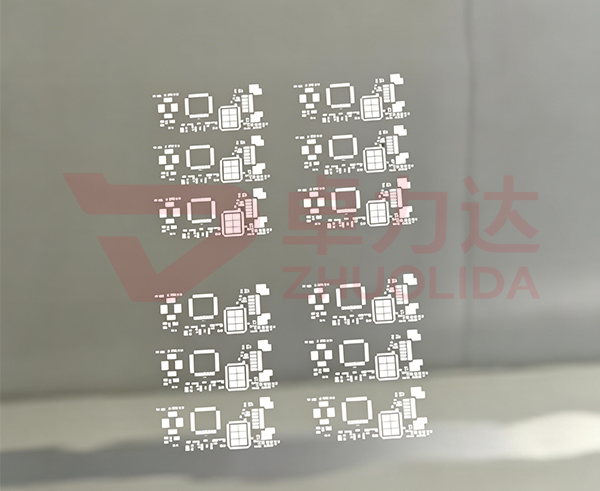
In the precision metal manufacturing industry, both Electroforming processing and electroplating process follow the principle of electrochemical deposition. They are frequently confused. Despite sharing fundamental electrolytic reactions, they differ essentially in core objectives, product attributes and forming logics. Electroforming processing aims to manufacture standalone components, producing complete metal parts separable from the master mold via metal electrodeposition. The electroplating process deposits a thin metal coating on the surface of existing workpieces for substrate surface modification and protection. Comparison between electroforming and electroplating shall start from underlying principles, clarifying deposition thickness, mold to product relationships and application scenarios, so as to support rational selection for semiconductor precision components and precision metal structural parts. Electroforming processing and electroplating process adopt different electrolyte systems, current control modes and substrate requirements, resulting in obvious discrepancies in mechanical properties and dimensional accuracy of final outputs. Comparison between electroforming and electroplating serves as the foundation for process selection in precision manufacturing. Especially in the development of micron scale semiconductor templates, precision spring probes and micro structure parts, proper process selection directly determines product yield and service performance.
The electroplating process is essentially a surface treatment technology. In the electroplating process, target workpieces serve as cathodes immersed in electrolyte containing target metal ions. Driven by applied electric fields, metal ions are reduced and deposited on workpiece surfaces to form thin metal coatings. The substrate constitutes the main body of finished products, and coatings adhere firmly to workpieces and cannot be stripped. Coating thickness generally ranges from several micrometers to tens of micrometers. Its main functions include corrosion resistance, improved electrical conductivity, enhanced wear resistance and decorative finishing. Common electroplating types cover gold plating, nickel plating, copper plating and silver plating, widely applied for surface protection of hardware parts, connectors and circuit boards. The electroplating process will not change the overall profile of parts; it only modifies surface layer material properties. Once coatings peel off, underlying substrates will be exposed.
Electroforming processing is an additive manufacturing forming technology instead of surface treatment. For electroforming processing, patterned conductive master molds act as substrates. Metal ions continuously deposit on master mold surfaces and accumulate into thick layer metal structures. After forming, metal products are stripped from master molds to obtain independent metal components. Finished parts from electroforming processing are standalone components separated from master molds, which only function as forming carriers rather than part of final products. Electroforming processing supports a wider thickness range from tens of micrometers to several millimeters. It is suitable for manufacturing high precision micro holes, complex special shaped structures and ultra thin precision metal parts. Semiconductor ball placement stencils, precision metal shadow masks and micro filters are typical products of electroforming processing.
The first core distinction in comparison between electroforming and electroplating lies in product substrate affiliation. Electroplated metal layers attach to original workpieces, integrating with substrates and cannot be separated individually. Metal parts formed by electroforming processing can be completely detached from master molds, which may be reused repeatedly to produce identical parts. The second point in comparison between electroforming and electroplating covers thickness control and structural functions. Thin electroplated layers optimize surface performance and cannot construct main body structures of parts. Metals deposited by electroforming constitute part bodies themselves, generating contours and structures as designed.
Comparison between electroforming and electroplating also involves process control and defect management. The electroplating process prioritizes coating adhesion. Coatings shall tightly bond with substrates without blistering or peeling. Indicators including coating uniformity, porosity and corrosion resistance are strictly controlled. Electroforming processing gives top priority to internal stress management. Excessive internal stress within electroformed layers will lead to warpage, deformation or cracking after demolding. Therefore, electroforming processing frequently adopts pulse current and low stress alloy electrolytes to reduce residual stress in formed components. Electroplating generally requires no subsequent demolding procedure. Electroforming processing must implement demolding, stress relief post treatment and comprehensive inspection after electrodeposition, featuring a longer process chain.
In terms of pattern reproduction capability, electroforming processing can faithfully replicate micro morphologies on master mold surfaces. Micron scale patterns and micro hole contours on master molds can be fully transferred to electroformed parts, enabling ultra high precision replication and forming. Electroplating possesses no structural forming capacity. It cannot fabricate standalone micro hole arrays or complex three dimensional micro structures on substrates and merely covers existing profile workpieces with metal layers.
For application scenarios, the electroplating process is mostly used for surface modification of finished parts, e.g. gold plated connector contacts for better electrical conductivity, nickel plated stainless steel parts for improved rust resistance. Electroforming processing directly manufactures precision functional components. Products such as semiconductor packaging electroformed templates, precision metal filter screens, miniature test spring probes and holographic anti counterfeiting molds rely on electroforming processing to realize micro structures with high aspect ratio and smooth vertical hole walls. Such complex micro structures cannot be manufactured by electroplating.
Admittedly, electroforming processing and electroplating process share electrochemical fundamentals and similar equipment configurations including electrolyte tanks, DC or pulse power supplies and anode assemblies, which easily cause conceptual confusion. Nevertheless, they feature completely different process objectives and cannot substitute for each other. Select electroplating if protective or conductive coatings are needed for existing workpieces. Choose electroforming processing if standalone parts with high precision micro structures shall be manufactured.
With the development of semiconductor and precision instrument industries, demands for micro structure parts keep growing. Benefiting from high fidelity replication and stress free forming, electroforming processing finds expanding applications in high end precision manufacturing. As a mature surface treatment technology, electroplating process is widely adopted for protection of general purpose components and surface modification of electronic parts. Proper comparison between electroforming and electroplating and clear understanding of their application boundaries facilitate reasonable manufacturing route planning in the R&D phase, reduce process trial and error costs and improve R&D efficiency of precision parts.
Contact:赖先生
Phone:+86 18938693450
Tel:0755-2708-8292
Email:yw9@zldsmt.com
Add:深圳市宝安区福永镇新和村福园一路华发工业园A3栋
 Zhuolida