Welcome: Shenzhen Zhuolida Electronics Co.TD
Language:
 ∷
∷

∷
∷
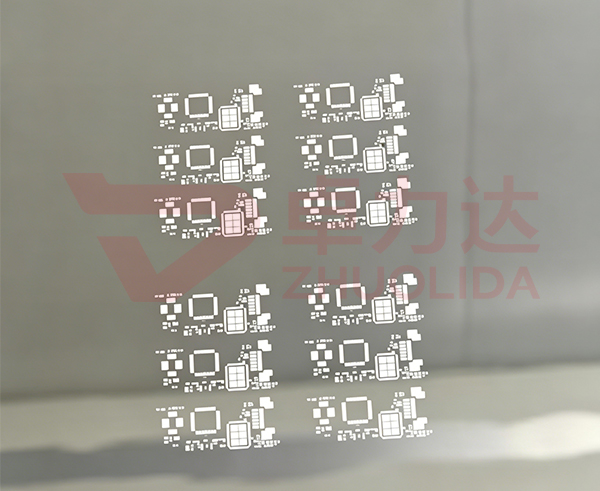
Semiconductor packaging and testing is a core component of the back-end of the semiconductor industry chain, performing key functions such as chip packaging, electrical testing, and yield screening. As the core precision tooling in the packaging and testing process, wafer templates directly determine the processing accuracy and mass production yield of processes such as wafer printing, ball placement, testing, and dicing. With the rapid adoption of advanced packaging technologies, the demand for processing fine-pitch, high-density, and large-size wafers continues to rise, imposing stringent requirements on the flatness, microvia precision, structural stability, and batch consistency of stencils. Semiconductor packaging and testing wafer stencil manufacturers specialize in the R&D and mass production of precision wafer stencils, leveraging mature precision molding processes to meet the diverse production needs of various high-end chip packaging and testing applications. Semiconductor packaging and testing wafer template manufacturers have deeply rooted themselves in the packaging and testing support sector, continuously optimizing production processes and quality control systems to address industry pain points such as insufficient precision, susceptibility to deformation, and poor durability in traditional templates. These manufacturers focus on process iteration, constantly upgrading precision machining and clean production systems to provide core support for the semiconductor packaging and testing industry’s development toward large-scale, high-precision operations.
Semiconductor packaging and testing wafer template manufacturers possess a complete, standardized, closed-loop, and clean processing system. The entire workflow encompasses eight core processes: substrate selection, precision surface pretreatment, photolithographic pattern transfer, precision molding, non-destructive post-processing, stress aging, comprehensive precision inspection, and clean packaging and shipment. The entire process is conducted in a Class 100 cleanroom with constant temperature, effectively preventing defects such as template warping, aperture misalignment, rough hole walls, and batch inconsistencies. The manufacturer strictly adheres to the quality control standards of the semiconductor packaging and testing industry, customizing processing parameters for different packaging processes and wafer specifications to ensure the templates are compatible with various packaging and testing scenarios, including ball placement, printing, testing, and dicing. Leveraging automated precision production lines, semiconductor packaging and testing wafer template manufacturers accommodate both small-batch custom samples and large-scale mass production, balancing product precision with production efficiency to consistently meet the capacity and quality demands of the semiconductor packaging and testing industry.
Substrate selection and precision pretreatment are the primary processes through which semiconductor packaging and testing wafer template manufacturers ensure product quality. Wafer templates are typically made from precision metal sheets with high flatness, low stress, and corrosion resistance. During production, the uniformity of substrate thickness, surface flatness, and material density are rigorously screened, and non-conforming sheets with oxidation, scratches, deformation, or uneven stress are rejected. Subsequently, through multiple processes—including alkaline degreasing, ultrasonic deep cleaning, plasma activation, and micro-etching leveling—oil residues, oxide layers, and microscopic impurities are thoroughly removed from the substrate surface. This enhances the adhesion of the photoresist coating and prevents subsequent issues such as pattern peeling and uneven formation. For ultra-thin and large-size wafer templates, additional tension leveling and stress relief processes are incorporated to eliminate deformation issues during later use at the source. Manufacturers of semiconductor packaging and testing wafer templates refine pre-treatment parameter standards to accommodate the processing characteristics of different substrate materials. These manufacturers strictly control pre-treatment cleanliness, laying a solid foundation for high-precision template forming.
The precise transfer of photolithographic patterns is a critical step in ensuring the accuracy of templates and represents a core technological advantage for manufacturers of semiconductor packaging and testing wafer templates. In a cleanroom environment, the pre-treated substrate undergoes uniform photoresist coating or dry film lamination to ensure a smooth, bubble-free, and pinhole-free photoresist layer, providing a stable substrate for the reproduction of micro-patterns. High-precision photomasks are fabricated according to packaging and testing process requirements. Through precise alignment, uniform UV exposure, and constant-temperature quantitative development, patterns such as micro-hole arrays, positioning references, and functional exclusion structures are accurately transferred onto the substrate surface, forming a uniform, corrosion-resistant protective layer. Following development, the substrate undergoes low-temperature curing and a comprehensive manual inspection to ensure clear pattern outlines, sharp edges, and the absence of residual adhesive or distortion, fully meeting the positional accuracy requirements for wafer packaging and testing. Manufacturers of semiconductor packaging and testing wafer templates precisely control core parameters such as exposure, development, and alignment to strictly minimize pattern formation errors. These manufacturers employ full-area alignment calibration technology to significantly enhance the accuracy and consistency of pattern replication.
Precision forming is the core of the entire process and directly determines the core performance of the wafer stencil. Manufacturers of semiconductor packaging and testing wafer stencils adapt two mainstream processes—precision etching and electroforming—based on the stencil’s application scenario. For high-end requirements such as ultra-fine pitch, high-density arrays, and ultra-thin substrates, they employ low-stress forming technology to effectively control microvia verticality, aperture uniformity, and substrate flatness. During processing, the chemical solution ratios, processing temperature, spray pressure, and molding duration are controlled in real time to avoid issues such as excessive side etching, aperture deviations, and uneven substrate thickness. This ensures that the micro-holes in the molded templates are smooth, vertical, burr-free, and free of flaring, enabling precise alignment with precision processes such as wafer balling, solder paste printing, and probe testing. The entire molding process involves no mechanical contact and generates no processing stress, making it suitable for long-term use in high-frequency packaging and testing production environments. Manufacturers of semiconductor packaging and testing wafer stencils leverage mature molding processes to solve various challenges in the fabrication of high-precision stencils. These manufacturers continuously optimize molding parameters to enhance the stencils’ precision and compatibility.
Non-destructive post-processing and stress aging are critical steps for enhancing template durability and stability. After molding, residual resin layers on the template surface are removed via a gentle demolding process. The templates then undergo multi-stage pure water rinsing, ultrasonic micro-pore cleaning, and vacuum drying to thoroughly eliminate chemical residues, metal particles, and dust from both the micro-pores and the surface, meeting the stringent cleanliness standards of semiconductor manufacturing. Subsequent processes—electrolytic polishing, passivation for corrosion protection, and stress aging—effectively release residual stresses in the substrate, improving the template’s surface finish, corrosion resistance, and fatigue resistance. This prevents issues such as deformation, pore blockage, and accuracy degradation caused by long-term, high-frequency use. For high-reliability packaging and testing applications, such as automotive and industrial control, surface hardening processes are further enhanced to extend the template’s service life. Semiconductor packaging and testing wafer template manufacturers refine post-processing procedures to accommodate diverse packaging and testing requirements. These manufacturers strictly control cleanroom post-processing standards to ensure consistent quality of templates upon shipment.
Comprehensive precision inspection and clean packaging are the final stages of quality control for manufacturers of semiconductor packaging and testing wafer templates. Equipped with precision instruments such as laser aperture profilometers, flatness testers, array accuracy analyzers, and high-magnification microscopes, these manufacturers conduct comprehensive inspections of core metrics including template thickness, microvia dimensions, via spacing accuracy, surface flatness, and positioning benchmarks. They strictly control micron-level tolerances and screen for defects such as missing microvias, accuracy deviations, and surface imperfections. Templates that pass inspection undergo anti-static vacuum packaging in a Class 100 cleanroom environment, isolating them from dust, moisture, and oxidative corrosion to ensure that precision is maintained and structural integrity is preserved during storage and transportation. Semiconductor packaging and testing wafer template manufacturers have established a comprehensive quality traceability system, enabling full traceability and control of production processes. Through rigorous inspection standards, these manufacturers guarantee the stability and reliability of every batch of templates.
In high-end logic chip packaging and testing applications, where pin density is high and precision requirements are extremely stringent, the uniformity of micro-holes and alignment accuracy in the templates are subject to exceptionally strict demands. Manufacturers of semiconductor packaging and testing wafer templates specifically optimize the micro-pitch array structure to ensure precise and stable ball placement and printing processes, effectively reducing defects such as cold solder joints, solder bridging, and testing misjudgments. Semiconductor packaging and testing wafer stencil manufacturers leverage high-precision molding processes to meet the demands of high-density chip mass production, significantly improving packaging yield rates. These manufacturers continuously optimize stress structures to ensure that large-size stencils remain distortion-free during long-term use.
In high-capacity memory chip packaging and testing applications, memory chip wafer arrays are large in scale with densely packed contact points, imposing stringent requirements on the overall flatness and consistency of the stencils. Manufacturers of semiconductor packaging and testing wafer templates have optimized their comprehensive molding processes to resolve local precision deviations in large-area templates, ensuring uniform packaging and testing results across the entire wafer. Through iterative parameter adjustments, these manufacturers have enhanced the templates’ wear resistance and fatigue resistance to meet the demands of high-volume memory chip production. Relying on stable process systems, manufacturers of semiconductor packaging and testing wafer templates continue to improve quality and efficiency in memory chip packaging and testing.
In automotive-grade power chip packaging and testing applications, automotive chips demand stringent reliability standards, and template precision directly impacts the chip’s core performance in high-temperature resistance and vibration resistance. Manufacturers of semiconductor packaging and testing wafer templates have reinforced structural strength and corrosion resistance to accommodate wide-temperature, high-frequency mass production scenarios. These manufacturers strictly adhere to automotive-grade quality control standards to ensure templates meet the production demands of high-end automotive chips. Manufacturers of semiconductor packaging and testing wafer templates continuously refine their precision processes to support the high-quality development of the automotive-grade semiconductor industry.
Overall, wafer templates are indispensable precision core tooling in the semiconductor packaging and testing industry, and their machining precision and quality directly determine the overall standard of chip packaging and testing. Relying on a comprehensive precision machining system, manufacturers of semiconductor packaging and testing wafer templates consistently produce high-precision, highly stable templates for packaging and testing. Semiconductor packaging and testing wafer template manufacturers focus on addressing industry-specific process challenges, continuously optimizing forming and quality control systems to meet the evolving demands of advanced packaging technologies. With precision processes at their core, these manufacturers continually push beyond the limitations of traditional processing methods, providing robust process and product support for the large-scale, high-end development of China’s semiconductor packaging and testing industry.
Contact:赖先生
Phone:+86 18938693450
Tel:0755-2708-8292
Email:yw9@zldsmt.com
Add:深圳市宝安区福永镇新和村福园一路华发工业园A3栋
 Zhuolida