Welcome: Shenzhen Zhuolida Electronics Co.TD
Language:
 ∷
∷

∷
∷
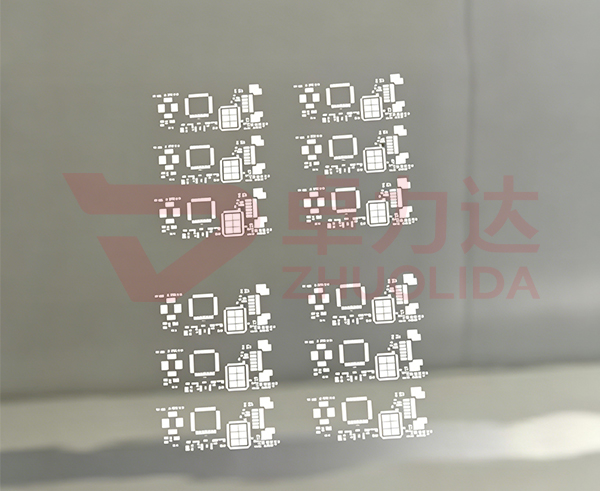
Micro-hole processing templates for semiconductor test wafers are core precision components in the semiconductor wafer testing and packaging inspection processes. Primarily manufactured using metal electroforming processes, they feature uniform micro-hole diameters, smooth hole walls, extremely tight dimensional tolerances and high structural stability. Capable of meeting the process requirements for micro-hole alignment, continuity testing and precision screening of various wafer chips, they are key components in ensuring mass production yield and testing accuracy for semiconductor chips. These micro-hole processing templates for semiconductor test wafers are capable of accommodating micrometre and sub-micrometre micro-hole array layouts, effectively addressing industry pain points such as hole position deviations, burrs on hole walls and poor consistency in traditional templates. They are widely applicable to wafer testing scenarios for memory chips, logic chips and power chips. The manufacturing of semiconductor test wafer micro-hole processing templates relies on an integrated process combining Precision Electroforming, photolithographic transfer and clean post-processing. Strictly adhering to Class 100 cleanroom production standards, this enables the batch production of high-density micro-hole arrays with stability and high precision. Manufacturers specialising in electroforming templates for semiconductor test wafer micro-hole processing have deep expertise in the field of precision micro-hole formation. They continuously optimise electrolyte formulations, electroforming parameters and pattern transfer processes to enhance micro-hole precision and template service life, providing stable and reliable precision process support for the semiconductor packaging and testing industry.
The overall process for manufacturing micro-hole processing templates for semiconductor test wafers is rigorous and meticulous, carried out entirely within a cleanroom. It comprises six core processes: substrate master mould preparation, conductive layer deposition, precision electroforming, non-destructive demoulding, micro-hole post-processing, and precision inspection. The entire process is closed-loop and controllable, effectively ensuring that the high-standard requirements for micro-hole diameter, pitch, perpendicularity and flatness are met. Manufacturers specialising in electroforming templates for micro-hole processing on semiconductor test wafers have established a dedicated parameter control system to address process challenges such as micro-hole deformation, rough hole walls and micro-hole blockage. They implement precise data control at every stage of the process to ensure that each batch of products meets consistency standards. The fabrication of micro-hole processing templates for semiconductor test wafers differs from that of standard metal templates, placing greater emphasis on the overall uniformity of the micro-hole array and electrical conductivity stability. This enables the templates to withstand the high-frequency, high-precision and prolonged repetitive testing operations of wafers, significantly enhancing the overall efficiency and stability of semiconductor wafer inspection.
The preparation of high-precision master moulds is a critical preliminary step in the fabrication of micro-hole processing templates for semiconductor test wafers, directly determining the forming accuracy of the finished micro-holes. Manufacturers of electroformed templates for micro-hole processing on semiconductor test wafers utilise high-transparency, high-flatness quartz glass as the master template substrate. Based on the parameters specified in the wafer test drawings, micro-hole array patterns are produced using laser direct writing and UV lithography processes, precisely defining the micro-hole aperture, pitch, array layout and positioning benchmarks. Following photolithographic formation, each area is inspected using high-magnification microscopy to eliminate defective master templates exhibiting pattern distortion, positional shifts or localised defects, thereby ensuring micro-hole formation accuracy from the outset. Semiconductor test wafer micro-hole processing templates demand extremely high precision in the master template’s pattern; only when the master template’s micro-hole contours are clear and dimensions precise can the resulting electroformed templates meet the standards for precision wafer testing.
The conductive treatment of the master template is a critical foundational process for ensuring the smooth production of micro-hole processing templates for semiconductor test wafers. As quartz master templates are inherently non-conductive, electroforming cannot be carried out directly; therefore, a uniform conductive coating must be applied. Manufacturers of micro-hole processing templates for semiconductor test wafers employ a vacuum sputtering process to deposit an ultra-thin, uniform and dense conductive metal layer onto the master template surface. This ensures the conductive layer is free from pinholes and thickness variations, resulting in uniform current distribution across the entire master template surface. Once the conductive treatment is complete, a plasma cleaning process is used to remove surface dust and impurities, thereby strengthening the adhesion of the conductive layer. This prevents issues such as coating detachment, micro-hole deformation and array irregularities during the electroforming process, providing stable process conditions for subsequent overall moulding.
Pulse electroforming is the core forming process in the manufacture of micro-hole processing templates for semiconductor test wafers, and determines the final quality of the template’s micro-holes. Manufacturers of electroformed templates for micro-hole processing on semiconductor test wafers use the pre-treated conductive master template as the cathode. This is placed in a sealed electroforming tank alongside a high-purity metal anode. By precisely controlling the electrolyte temperature, pH, current density and deposition rate, metal ions are deposited uniformly, slowly and densely onto the patterned areas of the master template. The use of pulsed segmented deposition effectively reduces internal metal stresses, preventing overall deformation of the template, whilst ensuring that the micro-hole inner walls are smooth and vertical, free from side etching and burrs, and that the micro-hole arrays are neatly arranged with uniform aperture sizes. This process reliably achieves the monolithic formation of ultra-fine apertures without the need for secondary machining, maximising the retention of micro-hole structural precision and fully meeting the high-precision testing requirements of semiconductor wafers.
Non-destructive demoulding and precision post-processing are critical steps in optimising the performance of micro-hole processing templates for semiconductor test wafers. Following electroforming, a gentle, non-destructive demoulding process is employed to achieve complete separation of the metal template from the master mould, thereby eliminating issues such as deformation due to pulling or micro-hole collapse. Following demoulding, the template undergoes a series of cleaning processes, including multi-stage ultrasonic cleaning with pure water, plasma dust removal and residual liquid removal, to thoroughly eliminate any residual impurities and metal particles within the micro-holes, ensuring complete electrical conductivity without blockages. Depending on application requirements, semiconductor test wafer micro-hole processing templates may also undergo passivation, polishing and anti-corrosion treatments. These processes enhance the template’s surface finish, corrosion resistance and wear resistance, reduce contact resistance during testing, extend the template’s service life, and ensure suitability for prolonged continuous wafer testing operations. Manufacturers of electroformed semiconductor test wafer micro-hole processing templates strictly control post-processing details to eliminate defects such as micro-hole blockages and rough hole walls.
Comprehensive precision inspection and clean packaging constitute the final quality assurance stage in the manufacturing of micro-hole processing templates for semiconductor test wafers. Manufacturers of electroformed micro-hole processing templates for semiconductor test wafers are equipped with precision instruments such as scanning electron microscopes, laser aperture analysers, coordinate measuring machines and electrical continuity testers. These are used to conduct comprehensive inspections of the templates’ micro-hole aperture, pitch, perpendicularity, flatness, electrical continuity and surface roughness, rigorously selecting only conforming products to ensure all parameters meet semiconductor packaging and testing standards. Finished templates that pass inspection are vacuum-sealed in an anti-static environment within a cleanroom, shielding them from dust, moisture and oxidation. This ensures that the micro-hole structure remains uncontaminated and undistorted during transport and storage, guaranteeing stability and precision when used in equipment.
Micropore processing templates for semiconductor test wafers have a wide range of applications, comprehensively covering various wafer packaging and precision testing fields within the semiconductor industry. Thanks to their high micropore precision, excellent stability and long service life, they have become core supporting components for high-end chip testing. Semiconductor test wafer micro-hole processing templates can be customised to meet the specifications of different chips, accommodating production requirements for high-density, ultra-fine apertures and multi-array structures. They align with current industry trends towards chip miniaturisation, integration and high precision. Manufacturers of electroformed semiconductor test wafer micro-hole processing templates are continuously refining their processes to push the limits of micro-hole formation, thereby helping the semiconductor packaging and testing industry to improve quality and efficiency.
In the field of memory chip testing, micro-hole processing templates for semiconductor test wafers are primarily used for electrical testing, contact testing and defective die screening of memory wafers such as NAND and DRAM. The micro-hole arrays can precisely align with the memory cells on the wafer, enabling high-speed, high-volume automated testing. These templates are designed to accommodate high-density micro-hole arrangements, effectively enhancing the testing efficiency and accuracy of memory wafers. Electroforming manufacturers of micro-hole processing templates for semiconductor test wafers optimise the flatness of the micro-hole inner walls to meet the high-frequency testing requirements of memory chips, thereby reducing signal interference and ensuring accurate and stable test data.
In the testing of logic and AI chips, micro-hole processing templates for semiconductor test wafers are suitable for processes such as precision circuit inspection, micro-pin alignment and functional reliability testing, meeting the testing requirements of ultra-high-density circuit wafers. The machining of semiconductor test wafer micro-hole processing templates enables the one-piece formation of ultra-fine apertures, aligning with the trend towards miniaturisation in high-end chips. Through precise process control, electroforming manufacturers of these templates ensure the consistency of micro-hole arrays, effectively improving the packaging yield of high-end logic chips.
In the fields of power semiconductors and automotive chips, these micro-hole processing templates are designed for high-reliability, high-standard wafer testing environments. They can withstand prolonged, high-frequency repetitive testing and possess excellent corrosion resistance and fatigue resistance. The manufacturing process reinforces structural stability and micro-hole precision, meeting the wide-temperature, high-reliability testing standards required for automotive chips. Electroforming manufacturers of micro-hole processing templates for semiconductor test wafers optimise materials and processes for power chip testing scenarios, ensuring the templates operate stably under harsh conditions and supporting the high-quality development of the automotive semiconductor industry.
Overall, micro-hole processing templates for semiconductor test wafers are indispensable precision components in the modern semiconductor packaging and testing industry, offering significant process advantages and a wide range of applications. The manufacturing of micro-hole processing templates for semiconductor test wafers continues to evolve towards ultra-fine apertures, high-density arrays, enhanced durability and superior cleanliness, continually pushing the boundaries of traditional processing techniques. Relying on a mature electroforming technology system, manufacturers of these templates continue to drive the upgrading of the semiconductor wafer testing and packaging industries, providing robust process support for the domestic semiconductor precision manufacturing sector.
Contact:赖先生
Phone:+86 18938693450
Tel:0755-2708-8292
Email:yw9@zldsmt.com
Add:深圳市宝安区福永镇新和村福园一路华发工业园A3栋
 Zhuolida