Welcome: Shenzhen Zhuolida Electronics Co.TD
Language:
 ∷
∷

∷
∷
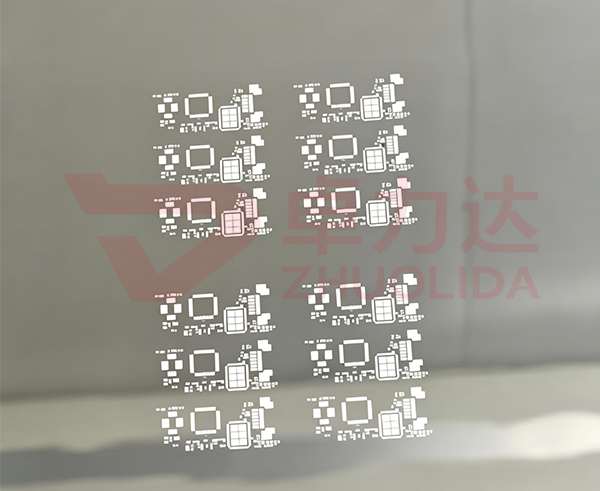
Ultra-thin templates for semiconductor packaging and testing are core ultra-thin precision components used in the packaging and precision testing of semiconductor wafers. Manufactured using an integrated process that combines an ultra-thin metal substrate with electroforming, they feature extremely thin thickness, high flatness, minimal deformation, precise hole positioning, and outstanding corrosion and fatigue resistance. They meet the production demands of current chip miniaturisation, thin-profile design and high-density array packaging and testing, and are widely used in wafer alignment, solder paste printing, probe testing and structural calibration processes for logic chips, memory chips and power devices. They are key components for improving semiconductor packaging and testing yield rates. Ultra-thin semiconductor packaging and testing wafer templates overcome the structural limitations of traditional thick-plate templates, effectively resolving industry challenges such as misalignment, uneven lamination and interference with packaging structures in ultra-thin packaging processes, whilst meeting the mass production requirements of advanced packaging technologies. The manufacturing of ultra-thin semiconductor packaging and testing wafer templates integrates precision processes such as photolithographic pattern transfer, pulse electroforming deposition, ultra-thin levelling and clean post-processing. The entire process is carried out in Class 100 cleanrooms, enabling the consistent achievement of dual standards: ultra-thin thickness and ultra-high structural precision. Manufacturers of electroformed ultra-thin templates for semiconductor packaging and testing wafers continuously optimise their electroforming systems and process control standards, constantly improving the flatness, dimensional consistency and service life of ultra-thin templates, thereby providing reliable precision support for the advanced semiconductor packaging and testing industry.
The processing of ultra-thin templates for semiconductor packaging and testing wafers follows a standardised precision workflow tailored to the characteristics of ultra-thin structures. This comprises six core processes: high-precision master template fabrication, conductive treatment of insulating master templates, electroforming of ultra-thin structures, non-destructive demoulding and shaping, precision clean strengthening treatment, and comprehensive precision inspection. Each stage is subject to rigorous control, focusing on resolving process challenges such as warping of ultra-thin sheets, pattern misalignment and deformation under stress. Manufacturers of electroformed ultra-thin templates for semiconductor packaging and testing wafers customise dedicated process parameter systems to address the specific forming characteristics of ultra-thin templates. They strictly control key parameters such as current density, deposition rate and cleaning pressure to prevent residual internal stresses in ultra-thin structures, ensuring uniform precision and stable performance across batch production. The processing of ultra-thin templates for semiconductor packaging and testing wafers differs from standard template processing, placing greater emphasis on overall flatness, microstructure perpendicularity and thickness uniformity. This enables adaptation to the high-frequency, high-precision and ultra-thin production conditions of advanced packaging, comprehensively enhancing the overall precision and production efficiency of wafer packaging and testing.
The preparation of high-precision master templates is a fundamental preliminary process in the fabrication of ultra-thin templates for semiconductor packaging and testing wafers, directly determining the microstructural precision and array consistency of the ultra-thin templates. Manufacturers of electroformed ultra-thin templates for semiconductor packaging and testing select high-transparency, high-flatness quartz glass as the master template substrate. Combining this with the parameters from the wafer packaging and testing drawings, they precisely design structures such as micro-hole arrays, alignment references and positioning grooves, and employ laser direct writing and UV lithography processes to achieve high-precision pattern fabrication. Through precise exposure, development and curing processes, the microstructural patterns required for packaging and testing are replicated, ensuring that pattern edges are sharp, free from burrs, and without distortion or misalignment. Following master mould formation, comprehensive inspection using high-magnification microscopy is conducted to screen out substandard master moulds exhibiting positional deviations, pattern defects or surface scratches. This eliminates precision defects in the finished product at source, providing an accurate reference for subsequent electroforming of ultra-thin structures, thereby meeting the stringent precision requirements for ultra-thin templates used in semiconductor wafer packaging and testing.
The process of making insulating master moulds conductive is a critical step in ensuring the stable production of ultra-thin templates for semiconductor packaging and testing wafers. As quartz master moulds are made of insulating material and are not inherently conductive, electroforming cannot be carried out directly; they must therefore undergo a uniform conductive coating process. Manufacturers of ultra-thin templates for semiconductor packaging and testing wafers employ a vacuum sputtering process to deposit an ultra-thin, uniform and dense conductive metal layer onto the master mould surface. The uniformity of the coating thickness is strictly controlled to eliminate defects such as pinholes, thickness variations and localised peeling, thereby ensuring a balanced and stable current distribution throughout the electroforming process. Following coating, a plasma cleaning process removes surface dust and impurities, strengthening the bond between the conductive layer and the master template. This effectively prevents issues such as structural delamination, pattern distortion and array misalignment during the electroforming process, thereby laying a solid process foundation for the stable formation of ultra-thin templates for semiconductor packaging and testing wafers.
Pulse electroforming is the core forming process in the fabrication of ultra-thin templates for semiconductor packaging and testing wafers, directly determining the thickness accuracy and structural stability of the ultra-thin templates. Manufacturers of electroformed ultra-thin templates for semiconductor packaging and testing wafers use the master template, which has undergone conductive treatment, as the cathode. This is placed in a temperature-controlled, sealed electroforming tank alongside a high-purity metal anode. By precisely controlling the electrolyte composition, temperature, pH level and pulse current parameters, metal ions are deposited at a constant speed, uniformly and densely across the patterned areas of the master template. The use of a low-stress pulse deposition process effectively releases internal metal stresses, fundamentally resolving issues of warping and deformation in ultra-thin templates. This ensures uniform template thickness, vertical structural integrity and microstructures free from side etching. As this process eliminates the need for secondary mechanical polishing, it preserves the original forming precision to the greatest extent possible. It is perfectly suited to the demanding conditions of ultra-thin wafer packaging and precision testing, fully demonstrating the core technological advantages of ultra-thin template processing for semiconductor packaging and testing wafers.
Non-destructive demoulding and clean strengthening treatment are crucial processes for optimising the comprehensive performance of ultra-thin semiconductor packaging and testing templates. Following electroforming, a gentle, non-destructive demoulding process is employed to achieve complete separation of the ultra-thin metal template from the master mould, thereby eliminating issues such as thin-plate deformation and microstructural damage caused by external pulling forces. Post-demoulding, a series of cleaning processes—including multi-stage ultrasonic cleaning with pure water, plasma dust removal and residual liquid elimination—thoroughly remove residual impurities from the template surface and within the micro-pores, ensuring the template is entirely clean and free of foreign matter. The processing of ultra-thin templates for semiconductor packaging and testing wafers is accompanied by electrolytic polishing, passivation and corrosion protection, and stress relief treatments. These effectively enhance the surface finish, corrosion resistance and structural rigidity of the templates, reduce contact resistance during packaging and testing operations, and significantly improve the reusability and service life of the ultra-thin templates. Manufacturers of electroformed ultra-thin templates for semiconductor packaging and testing wafers meticulously refine every post-processing parameter to ensure that the ultra-thin templates remain suitable for long-term use in high-intensity, high-precision wafer packaging and testing operations.
Comprehensive precision inspection and clean packaging are the final quality assurance processes for the machining of ultra-thin templates used in semiconductor packaging and testing wafers. Manufacturers of electroformed ultra-thin templates for semiconductor packaging and testing wafers utilise precision equipment such as coordinate measuring machines, laser thickness gauges, flatness testers and electrical conductivity testers to conduct comprehensive, full-scale inspections of the templates. These inspections assess parameters including overall thickness, microstructural precision, flatness, array spacing, electrical conductivity stability and surface roughness. Products are rigorously screened to ensure only those meeting specifications are selected, thereby preventing non-conforming items from entering the application phase. Finished templates that pass inspection undergo anti-static vacuum packaging in a Class 100 cleanroom environment. This process isolates the templates from dust, moisture and oxidative corrosion, preventing issues such as deformation and surface contamination during storage and transport, and ensuring stable precision and reliable performance when used in equipment.
Ultra-thin templates for semiconductor packaging and testing wafers align with current trends in advanced packaging within the semiconductor industry. They are widely used in core applications such as high-end chip wafer packaging, precision alignment, high-frequency testing and solder paste printing, meeting the industry’s demands for thinner chips, high-density integration and miniaturisation. The manufacturing of ultra-thin semiconductor packaging and testing wafer templates enables flexible, customised production of multi-specification, ultra-thin, high-precision templates, accommodating the differentiated packaging and testing processes of various chip types. Manufacturers of electroformed ultra-thin semiconductor packaging and testing wafer templates continuously refine their process technologies, constantly pushing the boundaries of ultra-thin forming processes, thereby supporting the semiconductor packaging and testing industry’s transformation towards higher precision, thinner designs and greater efficiency.
In the field of high-end memory chip packaging and testing, ultra-thin semiconductor packaging and testing wafer templates facilitate alignment and electrical testing for ultra-thin packaged memory wafers such as NAND and DRAM. They precisely match high-density memory cell arrays, avoid packaging interference issues caused by thick-plate structures, and improve packaging flatness and yield rates. The machining of ultra-thin semiconductor packaging and testing wafer templates meets the forming requirements of ultra-thin, high-density arrays, making them suitable for high-volume mass production of memory chips. Manufacturers of electroformed ultra-thin semiconductor packaging and testing wafer templates specifically optimise the stress structure of thin plates to ensure the templates remain distortion-free during long-term, high-frequency use.
In the field of high-end logic and AI chip packaging and testing, ultra-thin semiconductor packaging and testing wafer templates facilitate alignment and functional testing for ultra-thin packages featuring fine pins and high-density circuits, resolving industry challenges such as limited packaging space and stringent alignment precision requirements for microchips. The processing of ultra-thin semiconductor packaging and testing wafer templates relies on low-stress precision forming processes, meeting the production standards for high-end chips that demand finer details and thinner profiles. Manufacturers of electroformed ultra-thin semiconductor packaging and testing wafer templates continuously optimise forming details to ensure the templates’ precision remains consistently stable, thereby facilitating the industrialisation of high-end logic chips.
In the fields of power semiconductor and automotive chip packaging and testing, ultra-thin semiconductor packaging and testing wafer templates, with their high stability, fatigue resistance and corrosion resistance, are suited to the harsh packaging and testing conditions of automotive and industrial control chips—which involve wide temperature ranges and high-frequency operations—thereby meeting the high-reliability packaging and testing requirements of chips for high-end equipment. The processing of ultra-thin semiconductor packaging and testing wafer templates enhances the structural strength and environmental adaptability of thin plates, meeting stringent industrial-grade production standards. Manufacturers specialising in electroforming ultra-thin semiconductor packaging and testing wafer templates are deeply committed to high-end packaging and testing applications, continuously optimising the comprehensive performance of their products to provide robust support for the development of China’s advanced semiconductor packaging industry.
Contact:赖先生
Phone:+86 18938693450
Tel:0755-2708-8292
Email:yw9@zldsmt.com
Add:深圳市宝安区福永镇新和村福园一路华发工业园A3栋
 Zhuolida