Welcome: Shenzhen Zhuolida Electronics Co.TD
Language:
 ∷
∷

∷
∷
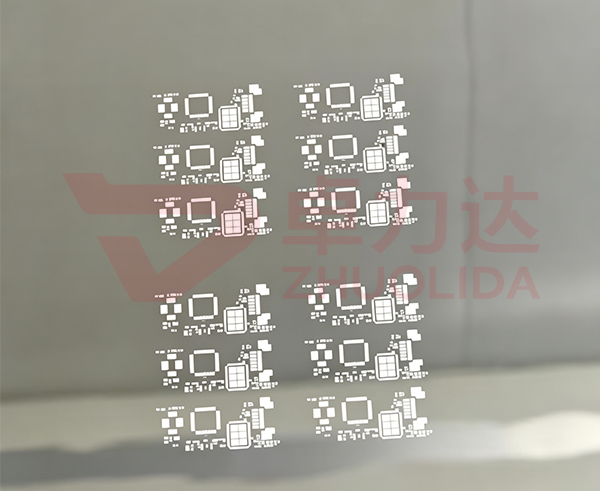
The semiconductor test wafer template is a core precision functional component in the wafer-level testing and packaging inspection stages of the semiconductor industry. It is primarily formed using electroforming and precision etching processes, featuring high micro-hole accuracy, good array consistency, excellent surface smoothness, wear resistance, deformation resistance, and stable electrical conductivity. It can accurately complete key processes such as chip point conduction testing, probe alignment calibration, packaging positioning, and defective grain screening, directly determining wafer testing efficiency, packaging yield, and chip mass production stability. It serves as an important precision carrier connecting wafer manufacturing and finished product testing.
As advanced packaging, high-density storage, and miniaturized logic chips rapidly evolve, traditional processing methods can no longer meet stringent requirements. The performance of semiconductor test wafer templates directly impacts the development level of the high-end chip industry. The processing of semiconductor test wafer templates integrates precision photolithography, pulse electroforming, microstructure forming, and clean post-processing into a unified process, strictly adhering to semiconductor class 100 clean production standards while balancing ultra-micro precision, ultra-thin thickness, and batch production stability, catering to the testing and packaging needs of various high-end chips.
Manufacturers of semiconductor test wafer templates focus on the field of semiconductor precision forming, continuously optimizing electrolyte formulations, electroforming parameters, and quality control systems throughout the entire process. They promote upgrades in semiconductor test wafer template processing towards sub-micron precision, high-density arrays, long lifespan, and high cleanliness, providing reliable core supporting facilities for the domestic semiconductor testing industry.
The overall processing flow of semiconductor test wafer templates is precise and rigorous, centered around six core processes: high-precision master mold preparation, insulating substrate conductivity treatment, electroforming/etching forming, non-destructive demolding shaping, precision clean post-processing, and comprehensive performance testing. A standardized, fully traceable production system is established, completed within clean rooms of class 100 to class 1000, with closed-loop control implemented for each process.
Manufacturers of semiconductor test wafer templates address technical challenges such as micro-hole clogging, substrate warping, and pattern shifting by establishing dedicated parameter adjustment plans, focusing on controlling key indicators such as current density, etching rate, deposition thickness, and cleaning pressure to ensure stable and uniform performance of batch products. The processing of semiconductor test wafer templates differs from ordinary metal template processing, placing greater emphasis on overall flatness, micro-hole verticality, array uniformity, and long-term usage stability, capable of adapting to high-frequency, long-duration, and high-precision wafer testing conditions, significantly improving the overall efficiency and reliability of the semiconductor packaging and testing stages.
The first step is the design and preparation of high-precision master molds, which lays the core foundation for semiconductor test wafer template processing. Manufacturers select high-transparency, high-flatness quartz glass as the master mold substrate, conducting precise pattern design based on wafer size, test point layout, probe spacing, and pin arrangement parameters. Techniques such as laser direct writing, ultraviolet photolithography, and high-precision film making are used to replicate microstructures such as test hole positions, positioning references, and signal channels, with exposure precision controlled within ±0.001μm to ensure sharp edges, no burrs, and no distortion. After mold formation, a comprehensive screening is conducted using scanning electron microscopes and laser aperture detectors to eliminate defects such as scratches, position deviations, and incomplete patterns, ensuring product accuracy from the source. The forming accuracy of the semiconductor test wafer template entirely relies on the quality of the master mold; therefore, master mold preparation is the primary step for manufacturers to control product quality.
The second step is the conductivity treatment of the insulating master mold to ensure smooth progress in semiconductor test wafer template processing. Quartz-based master molds are inherently non-conductive and cannot directly undergo electroforming operations. Manufacturers use vacuum sputtering coating technology to deposit a super-thin, uniform, and dense nickel-based conductive layer on the surface of the master mold, strictly controlling thickness uniformity to eliminate defects such as pinholes, uneven thickness, and local peeling, ensuring balanced and stable current distribution during the electroforming process. After coating, plasma cleaning technology is employed to remove surface dust and organic impurities, enhancing the bonding strength of the conductive layer and preventing issues such as structural layering, micro-hole deformation, and array disorder during the forming process, thereby solidifying the process foundation for semiconductor test wafer template processing.
The third step is the core forming process, which determines the final quality of the semiconductor test wafer templates. Manufacturers of semiconductor test wafer templates flexibly employ either pulse electroforming or precision chemical etching—the two mainstream processes—depending on the required precision. Ultra-high-precision, ultra-thin templates are primarily produced using pulse electroforming. In this process, a conductive master mould serves as the cathode, whilst a high-purity metal anode is placed within a sealed, temperature-controlled electroforming tank. By precisely regulating the electrolyte composition, temperature, pH value and pulse current, metal ions are deposited uniformly and densely, effectively reducing internal stress and preventing warping of the substrate; Conventional high-density array templates utilise double-sided synchronous chemical etching. Through precise depth control and low side-etch technology, micro-holes and slit structures are formed as a single integrated unit. The forming process is monitored in real-time throughout, ensuring that micro-holes are vertical and uniform, with consistent aperture sizes, free from side-etching and burrs, thereby meeting sub-micron testing accuracy requirements and fully demonstrating the technical advantages of semiconductor test wafer template processing.
The fourth step involves non-destructive demoulding and clean post-processing to optimise the overall performance of the semiconductor test wafer template. Following electroforming or etching, a gentle, non-destructive demoulding process is employed to prevent deformation of the thin sheet and collapse of the micropores caused by forceful pulling. Following demoulding, the templates undergo a series of cleanroom processes, including multi-stage ultrasonic cleaning with purified water, plasma dust removal and vacuum drying, to thoroughly remove any residual impurities from within the micro-holes and ensure full electrical conductivity. The manufacturing of semiconductor test wafer templates is complemented by electrolytic polishing, passivation for corrosion protection and stress relief treatments, which enhance the surface finish, corrosion resistance and fatigue resistance of the templates, reduce contact resistance during testing and extend their service life. Manufacturers of semiconductor test wafer templates strictly control the cleanliness of post-processing to meet the semiconductor industry’s stringent cleanroom standards.
The fifth step involves comprehensive precision inspection and clean packaging to ensure the quality of semiconductor test wafer templates upon dispatch. Manufacturers are equipped with high-end equipment such as coordinate measuring machines, scanning electron microscopes, electrical continuity testers and flatness testers to conduct full inspections of key parameters including micro-hole diameter, array pitch, flatness, electrical conductivity and surface roughness, with full data traceability throughout the process. Qualified products undergo anti-static vacuum packaging in a Class 100 cleanroom environment, isolating them from dust and moisture to ensure structural precision remains stable during transport and storage. Through comprehensive quality control, the manufacturing of semiconductor test wafer templates ensures long-term compatibility with various wafer testing equipment.
The application scenarios for semiconductor test wafer templates cover key sectors such as memory chips, logic chips, AI chips, power semiconductors and automotive chips, encompassing processes including wafer probe testing, reliability testing, packaging alignment and BGA ball placement calibration. They serve a wide range of end-user sectors including consumer electronics, servers, automotive electronics, industrial control and aerospace. With their ultra-high precision, high consistency and high cleanliness, semiconductor test wafer template manufacturing solutions align with industry trends towards chip miniaturisation, high density and high speed. Through continuous technological innovation, manufacturers of semiconductor test wafer templates are helping to improve quality and efficiency in China’s semiconductor packaging and testing industry, whilst accelerating the localisation of high-end chips.
In the field of memory chip testing, semiconductor test wafer templates are used for batch electrical testing and die sorting of memory wafers such as NAND and DRAM, with high-density micro-hole arrays precisely matching the layout of memory cells. The processing of these templates enables the formation of ultra-large micro-hole arrays, thereby enhancing testing efficiency. Manufacturers optimise the structure of these templates for high-frequency testing scenarios to ensure long-term operational stability.
In the fields of AI and high-end logic chips, semiconductor test wafer templates are adapted for functional testing of wafers with fine pins and ultra-dense circuits, meeting the stringent alignment and electrical continuity requirements of advanced packaging. The processing of these templates relies on ultra-precision forming technology to achieve nanometre-level structural alignment. Manufacturers of semiconductor test wafer templates are continuously pushing the boundaries of precision, enabling the research, development and mass production of high-end chips.
In the automotive and power semiconductor sectors, semiconductor test wafer templates are designed for chip reliability testing under wide-temperature and high-vibration conditions, featuring enhanced fatigue resistance and corrosion resistance. The manufacturing process reinforces mechanical properties to meet automotive-grade standards. Manufacturers specialising in this field focus on precision components for automotive applications, supporting the development of the new energy vehicle semiconductor industry.
Overall, semiconductor test wafer templates are indispensable core precision components in the semiconductor industry. The manufacturing of these templates continues to innovate and upgrade towards ultra-fine apertures, ultra-thin structures and high durability. Manufacturers, with technological innovation at their core, are constantly refining their precision manufacturing systems, providing a solid foundation of precision machining to ensure the autonomy and controllability of the domestic semiconductor industry.
Contact:赖先生
Phone:+86 18938693450
Tel:0755-2708-8292
Email:yw9@zldsmt.com
Add:深圳市宝安区福永镇新和村福园一路华发工业园A3栋
 Zhuolida